Places Worth a Journey
Every journey starts with a choice of where to go. Nepal holds an unusual range of places in a small area: temples on remote hilltops, busy old cities, national parks and some of the most visited Buddhist monuments in Asia. Here are four places that pilgrims and tourists travel long distances to see.
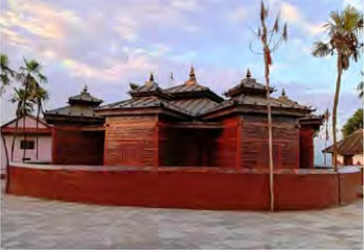
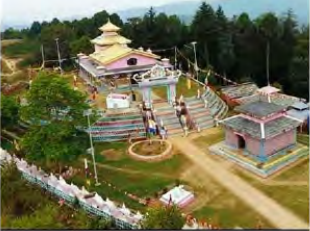
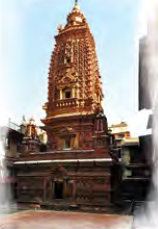
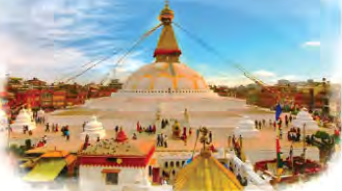
When you discuss which of these you would visit, a name on its own is not an answer. Give a reason. 'Boudhanath' tells your group nothing, but 'I would choose Boudhanath because I want to walk round the stupa in the evening when the butter lamps are lit' starts a real conversation. Two questions are worth answering for yourself before reading on: do you enjoy travelling, and why? Which is your favourite tourist place, and what makes it your favourite?
Expect the Unexpected: A Travel Article
'Expect the Unexpected' is a travel article by Mathilda Wu, a foreign visitor describing a classic Nepal 'triangle trip': Kathmandu, Chitwan and Pokhara. The three places sit roughly at the corners of a triangle on the map, and together they give a traveller the city, the jungle and the mountains in a single journey. The writer opens with a bold claim. Each place has its own charm, and very few places in the world can offer so many different kinds of charm at once. The rest of the article sets out to prove it, one place at a time, each under its own subheading.
Travelogue: a piece of writing, a talk or a film that describes a journey and the places, people and experiences met on it, usually told in the first person by the traveller.
The title is a promise. Again and again, the writer finds something that does not match what an outsider would predict: a cremation ground that feels calm rather than frightening, students who value skill above education, a capital city that is chaotic and yet completely safe at night. As you read, notice how each surprise is set up and then turned.
Kathmandu: History, Art and Everyday Life
For the writer, Kathmandu proves the old saying that 'the first impression is a lasting impression'. The city is huge, nestled in a green valley ringed by enormous mountains. Even the short drive from the airport leaves the visitor amazed by three things: the red-brick houses, the smiling faces of the people, and the mix of roaming cattle and busy traffic. It looks like a scene from a film, the writer says, except that real life turns out to be more sophisticated than the film.
The next surprise is on the walls. The visitors find a riot of colour: murals showing symbols, people, animals and imaginative images, running for more than a mile along the streets. They learn that street art is on the rise in Nepal, because local and international artists are setting up projects to send out messages of man-made beauty.
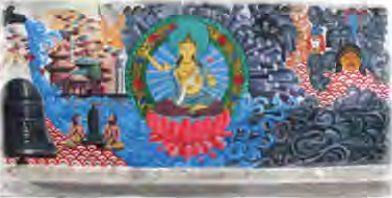
Then comes history. Nepal was never colonized. Before the country was unified in the 18th century, it was ruled by several kings, and they built three splendid Durbar Squares as royal palaces. All three are now monument zones of the UNESCO World Heritage Site in the Kathmandu Valley. The writer visits Patan Durbar Square and finds it genuinely impressive. Its quiet palace courtyards hold well-preserved pagodas and stone temples. A private guide named Kshitij explains the meaning of the wood carvings, symbols and ornaments, and his knowledge brings the ancient site to life. As they walk, flocks of pigeons circle above the monuments.
Because it is the off season, the square feels less like a tourist site and more like a place where local people sit and watch the time pass. The visitors chat with a group of college students on a break, and one of their beliefs 'somewhat blew us', meaning it astonished them: in today's Nepal, the students say, skill is more important than education.
At Pashupatinath Temple, another of the Valley's World Heritage monuments, the writer is struck by how Nepalis treat death as an everyday experience. Families bring their dead here for outdoor cremation on the bank of the Bagmati River. The writer expected to feel it was grisly, but found it calm instead, and was surprised that the families did not mind visitors being there. Some families were holding memorial ceremonies for the deceased: making special offerings and shaving the hair of the male relatives. Pashupatinath is also where you meet genuine sadhus, holy men in bright yellow and orange robes, smeared with ash, with long hair and beards. The writer thinks a photograph with them is worth taking.
Kathmandu's evenings end in Thamel, a lively hub full of restaurants and shops, famous for its nightlife. The writer found it as safe as anywhere in Nepal, and because so many local people hang out there too, it never feels like a place built only for tourists.
Chitwan: Close to the Wild
In Chitwan the travellers explore wild jungle and get close to a great deal of wildlife: the single-horned rhino, a couple of deer, wild boars, monkeys and countless beautiful birds. Chitwan National Park covers a vast area and offers dozens of jungle activities, including jeep safari, canoeing, jungle walks and cycling around the village. One afternoon they are the only group to take a boat ride, and the writer calls it a privilege to enjoy the tranquil view of the lake and its surroundings on their own.
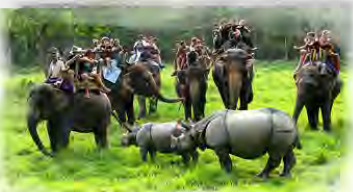
The writer's verdict on Chitwan is short: it is the perfect place for physically active travellers who want to discover the undisturbed vestiges, or remaining traces, of wild species. The only comparable place the writer knows of is probably in South Africa.
Pokhara: Lakes, Mountains and Adventure
The Pokhara section opens with a question and an answer: is there anywhere better than Pokhara in the world? 'Not in my dictionary', which means not in my opinion. About 200 km west of Kathmandu, Pokhara offers an entirely different picture from the crowded capital: clean streets, snow mountains, a relaxed, laid-back atmosphere and plenty of adventure.
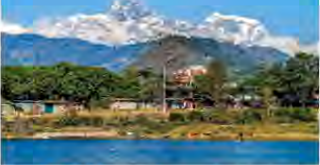
The centre of the small city is dominated by the beautiful Phewa Lake, which gives a clear view of the snow-capped Annapurna range. Many lakeside hotels have rooms where you can see the mountains from your bed, and the writer tells readers directly to ask their travel consultant for one. Annapurna seems to follow you everywhere in Pokhara, yet the visitors cannot get enough of it. An easy walk up to the hill where the World Peace Pagoda stands gives them a view of the white ranges and the whole city, which the writer calls 'simply mind-blowing'.
Besides trekking, Pokhara is arguably the best place in the world for paragliding. The writer tries it and describes soaring beside birds over spectacular scenery as something never to be forgotten. On the last morning they go to Sarangkot, a village known as the best place to watch the sunrise over the Annapurna Himalaya. The snow peaks turn from purple and pink to gold, and the whole valley below 'awoke' as the sun came up.
The article ends with feeling. The writer almost cried when it was time to leave and would return 'in a heartbeat', that is, immediately and without a second thought. The final message is aimed at other foreigners: Nepal is not a place to avoid because of media hoaxes, and the writer is sure the western visitors met on the way would 'see eye to eye', or fully agree.
Each of the three places gives the traveller something different: Kathmandu offers history, art, religion and nightlife; Chitwan offers wildlife and active jungle adventure; Pokhara offers lakes, mountain views, paragliding and sunrise.
How Travel Writing Works
A travel article is not a guidebook. A guidebook lists facts; a travel article shares an experience and tries to make the reader want to go. The writing in 'Expect the Unexpected' shows the main techniques clearly.
- It is told in the first person, with 'I' and 'we', so the reader travels alongside the writer.
- It is organised by place, with a subheading for each stop, which makes a long journey easy to follow.
- It is full of sensory detail: red-brick houses, circling pigeons, purple peaks turning gold.
- It uses strong, colourful adjectives such as splendid, majestically beautiful, breathtaking, incredible and mind-blowing.
- It speaks straight to the reader: 'Read on', 'ask your travel consultant to arrange one!'
- It mixes fact with opinion and ends with a clear recommendation.
- It uses informal idioms that make the voice sound like a friend talking.
| Idiom | Meaning |
| have the nerve to say so | be bold enough to make a strong claim |
| the first impression is a lasting impression | what you notice first stays with you |
| something blew us | it astonished us |
| not in my dictionary | not in my opinion |
| couldn't get enough of it | enjoyed it so much we wanted more |
| in a heartbeat | immediately, without hesitating |
| see eye to eye | agree completely |
Pronouncing C and CH
English spelling is an unreliable guide to sound. The single letter c and the pair ch each stand for more than one sound, and the only way to be sure is to learn the patterns and then the exceptions. Say these five words aloud: bench, character, machine, cell, comfort. The spelling looks similar, but you hear four different sounds.
| Sound | Sounds like the start of | Spelling | Example words |
| /tʃ/ | chair | ch | bench, attach, much, sandwich, which, detach, ostrich, spinach, enrich |
| /k/ | kite | ch or c | character, ache, chaos, architect, mechanic, technology, chemical, chemist, scheme, mechanical, cholera, chorus, echo, comfort, cordial, traffic, club |
| /ʃ/ | shop | ch or ci | machine, brochure, champagne, electrician, musician, beautician |
| /s/ | sun | c | cell, decent, incident |
Most of these words follow a small number of patterns.
- ch in ordinary everyday English words, and at the end of a word, usually sounds /tʃ/: much, which, attach, enrich.
- ch in words that came from Greek, which are often words of science, medicine and music, sounds /k/: chemical, cholera, chorus, architect, technology, scheme, echo.
- ch in words that came from French sounds /ʃ/: machine, brochure, champagne.
- c followed by e, i or y sounds /s/: cell, decent, incident.
- c followed by a, o, u, a consonant, or nothing at all sounds /k/: comfort, cordial, club, traffic.
- The ending -cian, used for people's jobs, sounds /ʃən/: musician, electrician, beautician.
Ache and chaos look as if they should use the /tʃ/ of chair, but both use /k/: ache rhymes with make, and chaos begins like kay. Stomach ends in /k/ too.
Agreeing and Disagreeing
When someone tells you something about themselves, you often want to say that the same is true of you, or that it is not. English does this with short answers that save you repeating the whole sentence. The key is the auxiliary, or helping, verb: you pick it up from the first speaker's sentence and use it again. If the sentence has no auxiliary, because it is in the present simple or past simple, you use do, does or did.
Agreeing with a positive statement: So + auxiliary + subject. 'I love hiking.' 'So do I.' 'She can swim.' 'So can my brother.'
Agreeing with a negative statement: Neither (or Nor) + auxiliary + subject. 'I don't like cold drinks.' 'Neither do I.' 'He hasn't finished.' 'Nor have we.'
Disagreeing, or showing a contrast: But + subject + auxiliary, adding not if the first sentence was positive. 'My father works in an office.' 'But mine doesn't. He runs a shop.' 'I can't drive.' 'But I can.'

Look at how each reply copies the verb. 'I'm going' is present continuous, so the replies use am. 'I haven't tried' uses have, so the replies use have. The same pattern works with any tense and any subject, as long as the auxiliary and the subject match.
| Statement | Agreeing | Disagreeing |
| I visit my grandparents every month. | So do I. | But I don't. |
| Mr Joshi is rather strict. | So is Mrs Karki. | But Mrs Karki isn't. |
| We were late yesterday. | So were we. | But we weren't. |
| She can't come on Saturday. | Neither can I. | But I can. |
| My sister doesn't eat meat. | Neither does mine. | But mine does. |
Neither is already negative, so the verb after it stays positive. 'Neither do I' is correct; 'Neither don't I' is a double negative and is wrong. Also keep the order: auxiliary before subject after So and Neither ('So do I', not 'So I do'), but subject before auxiliary after But ('But I don't').
Question Tags: The Basic Rules
Listen to people talking and you will hear sentences like 'Mr Joshi looks so intelligent, doesn't he?' The short question at the end turns a statement into a request for agreement. English speakers use these constantly, and getting them right is a sign of a confident speaker.
Question tag: a short question, made of an auxiliary verb and a pronoun, added to the end of a statement to check information or to invite the listener to agree. Example: 'It was raining that day, wasn't it?'
The tone of voice changes the meaning. When your voice falls on the tag, you are fairly sure and simply want agreement: 'Lovely weather, isn't it?' When your voice rises, you are really asking because you are not sure: 'You've locked the door, haven't you?'
Rule 1, opposite polarity: a positive statement takes a negative tag, and a negative statement takes a positive tag. 'James is working on that, isn't he?' 'They don't need to come this evening, do they?'
Rule 2, the same auxiliary: the tag repeats the first auxiliary or modal verb of the statement. If there is none, use do, does or did in the same tense. 'You hadn't met me before, had you?' 'The car sped along the road, didn't it?'
Rule 3, a pronoun for the subject: the tag always uses a pronoun, never a noun, and it must match the subject. 'Punam's parents have retired, haven't they?'
Rule 4, contracted negatives: a negative tag uses the short form. 'She is your cousin, isn't she?' is correct; 'She is your cousin, is not she?' is wrong.
| Statement | Auxiliary | Tag |
| You can make it, | can | can't you? |
| She's been working hard all day, | has | hasn't she? |
| The weather's bad, | is | isn't it? |
| You won't be late, | will | will you? |
| Your phone didn't break down, | did | did it? |
| You have a bath daily, | none, so do | don't you? |
Do not copy the main verb into the tag. 'James is working on that, doesn't he?' is wrong because the auxiliary is is, not does. Find the helping verb first, then build the tag from it.
Question Tags: Special Cases
The basic rules cover most sentences, but several kinds of statement need extra care. Each one below comes up often in speech and in examinations.
Negative words make a negative statement: never, hardly, scarcely, barely, rarely, seldom, no, none, nothing and nobody make the whole sentence negative, so the tag is positive. 'He never came again, did he?' 'Nawaraj seldom plays cards, does he?' 'I barely know you, do I?'
I am takes aren't I: there is no natural short form of 'am not' in a tag, so English uses aren't I. 'I am right, aren't I?' The negative form is regular: 'I'm not late, am I?'
Indefinite pronouns: nothing, everything, something and all (meaning all things) take it in the tag. Nobody, everybody, everyone, somebody, no one and none (meaning people) take they. 'Everything is okay, isn't it?' 'Everyone will be satisfied, won't they?' 'Nobody knows, do they?'
There is and there are: the word there is repeated in the tag. 'There is a coffee shop near the gate, isn't there?'
Imperatives: an order or request usually takes will you. 'Shut the window, will you?' 'Asmina, bring me your pen, will you?' A negative imperative also takes will you: 'Don't forget, will you?' Won't you, would you and can you are also possible for a polite request.
Let's and Let us: Let's, meaning a suggestion that includes the speaker, takes shall we. 'Let's have some fun, shall we?' 'Let's not have cold drinks, shall we?' Let us, when it asks someone for permission, takes will you: 'Let us go early today, will you?'
Have as a main verb: when have means own, take or must, it has no auxiliary of its own, so the tag uses do. 'You have a bath daily, don't you?' 'You have to go, don't you?' When have is an auxiliary, including have got, the tag uses have. 'He's got a very peculiar voice, hasn't he?'
I think, I believe, I suppose: the tag goes with the clause that carries the real information, not with I think. 'I think he's busy, isn't he?' With I don't think, the negative already sits in the first clause, so the tag is positive: 'I don't think he'll come soon, will he?'
Contractions hide the auxiliary, so unpack them before building a tag. 'd can be would or had: 'I'd rather go travelling, wouldn't I?' but 'You'd better leave, hadn't you?' 's can be is or has: 'She's tired, isn't she?' but 'She's finished, hasn't she?' Shan't is shall not, so 'I shan't be in your position, shall I?' and 'll is will, so 'This'll work, won't it?'
Hardly, rarely, seldom and never contain no 'not', which is why students miss them. 'You hardly ever came late, didn't you?' is wrong. The sentence is already negative, so the answer is 'You hardly ever came late, did you?'
Writing a Travelogue
A travelogue about a place you have recently visited follows the same plan as 'Expect the Unexpected', on a smaller scale. Six questions give you a ready-made outline, and each can become a sentence or a short paragraph.
- Where did you go? Name the place and say a little about where it is.
- How did you plan it? Mention booking, transport and timing.
- Who did you travel with?
- Did you have any special purpose for the journey?
- What were the most memorable activities and experiences? This is the heart of the piece, so give it the most space and detail.
- Did you learn anything important? End with a reflection or a recommendation.
Here is a short model built on those six questions.
Three Days in Bandipur. Last Dashain, my family and I spent three days in Bandipur, an old Newar hill town in Tanahun. My father planned the trip a month ahead. He booked a small guesthouse by phone, and we travelled by bus from Kathmandu to Dumre and then by jeep up the winding hill road. I went with my parents and my younger sister, and our purpose was simple: we wanted a quiet holiday away from traffic and noise.
Bandipur surprised me at once. Its main bazaar is closed to cars, so children play in the street and old men sit chatting on the stone steps of tall brick houses. On the second morning we climbed Thani Mai hill before dawn. As the sun rose, the long white line of the Himalaya turned from grey to gold in front of us. That afternoon we crawled through Siddha Cave with a local guide, our torches picking out strange shapes in the rock.
The trip taught me that a place does not need to be famous to be unforgettable. Bandipur is quiet, clean and proud of its old ways, and I would go back in a heartbeat.
Write a travelogue in the past tense and the first person. Name real places, include details a reader can see and hear, and finish with what the journey meant to you.
Weathers: A Poem of Two Seasons
Look at these two birds. One sits hunched on a snow-covered branch among bare twigs; the other, bright red and black, perches among green leaves. The first picture belongs to winter and the second to spring, and the differences are everywhere: white against green, bare branches against leaves, a bird sheltering against a bird on display.
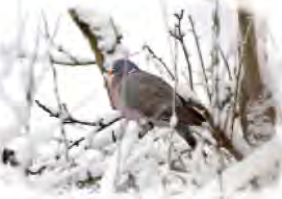
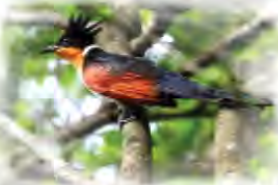
'Weathers' is by Thomas Hardy (1840 to 1928), an English novelist and poet who grew up in the countryside of Dorset and wrote about rural life all his life. The poem has two stanzas of nine lines each. The first describes spring, the weather the cuckoo likes. The second describes winter, the weather the shepherd shuns. Both stanzas end with the same line, 'And so do I'.
This is the weather the cuckoo likes,And so do I;When showers betumble the chestnut spikes,And nestlings fly;And the little brown nightingale bills his best,And they sit outside at 'The Traveller's Rest,'And maids come forth sprig-muslin drest,And citizens dream of the south and west,And so do I.This is the weather the shepherd shuns,And so do I;When beeches drip in browns and duns,And thresh and ply;And hill-hid tides throb, throe on throe,And meadow rivulets overflow,And drops on gate bars hang in a row,And rooks in families homeward go,And so do I.
Reading the Poem Closely
Stanza one is spring. Light showers tumble over the spiky flowers of the chestnut tree, and the young birds leave the nest and learn to fly. The nightingale sings his finest song. People sit outdoors at 'The Traveller's Rest', which is the name of a country inn. Young women come out in light cotton dresses printed with small flowers, and the townspeople start dreaming of holidays in the south and west. For an English reader, the south and west mean the warm, sunny coast where people take summer holidays. Birds, animals and humans all enjoy this weather, and the poet does too.
Stanza two is winter. The beech trees drip with rain, their leaves dull brown and grey, and the wind threshes and bends them to and fro. Streams hidden in the hills pulse and surge, one wave after another, and the small meadow streams overflow because it has rained so much. Water drops hang in a row from the bars of the wooden gates. The rooks fly home in their family groups to shelter from the harsh weather. The shepherd, who must work outdoors, hates this season, and so does the poet, because it is cold, wet and gloomy.
The poem can also be read symbolically. The word 'weathers' stands for the changing conditions of human life. Spring stands for the bright, happy side of life, and winter for its dark, difficult side. Everyone welcomes the first and shrinks from the second.
Stanza: a group of lines forming a unit in a poem, like a paragraph in prose. 'Weathers' has two stanzas of nine lines.
Refrain: a line or phrase repeated at regular points in a poem or song. In 'Weathers' the refrain is 'And so do I'.
Imagery: words that create a picture in the reader's senses. 'Drops on gate bars hang in a row' lets you see winter rather than just be told about it.
Symbol: something that stands for a larger idea beyond itself. In this poem spring is a symbol of the bright side of life and winter of the dark side.
- Contrast: the two stanzas are built as mirror images, pleasant against unpleasant, cuckoo against shepherd.
- Repetition: most lines begin with 'And', which piles up detail after detail like someone pointing out one thing after another.
- Rhyme: each stanza follows the same pattern, ABABCCCCB. In the first, likes and spikes rhyme, I and fly rhyme, then best, Rest, drest and west run four in a row before the refrain returns to I.
- Old spellings: 'drest' is an old spelling of dressed, kept for the rhyme with best and west.
The refrain 'And so do I' is the agreeing pattern from conversation: So + auxiliary + subject. In the spring stanza it means 'I like it too'; in the winter stanza it means 'I shun it too'. The same three words carry opposite feelings.
Listening for Order
Before listening, think about your own habits. Do you love travelling? Do you usually travel by road or by air? These questions switch on the words you will need. In the listening task, several different people talk about their travel experiences, and you number six pictures in the order in which the information comes. The picture of the check-in counter is already numbered 1 to show how it works.
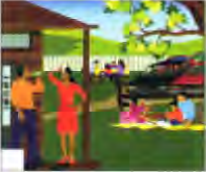
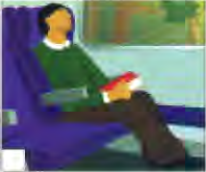
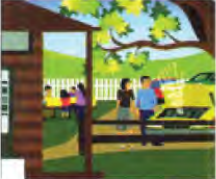
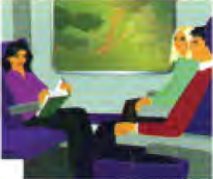
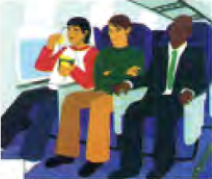
A picture-ordering task tests whether you can match what you hear to a scene, so the work begins before the audio starts.
- Before you listen, look at each picture and name its setting and the kind of transport or place in it: a house and garden, an airport, a train, a plane.
- Predict a few words each scene might bring up, for example boarding pass or luggage for an airport, compartment or platform for a train, seat belt or window seat for a plane.
- On the first hearing, do not write. Listen for the setting of each speaker and make a light mark only.
- On the second hearing, write the numbers and confirm each one with a detail you actually heard.
- Afterwards, check that every picture has exactly one number and no number is used twice.
The task ends with speaking: recount a memorable experience from one of your own journeys and share it with the class. Tell it in the past tense, keep the events in order with words like first, then, after that and finally, and include one moment that surprised you. That surprising moment is what makes a listener remember your story.
Making a Tourist Brochure
Brochure: a small printed booklet or folded leaflet that gives information about a place, product or service, designed to attract visitors or customers.
A travelogue tells a story; a brochure sells a place. It is read quickly, so it uses headings, short lines and lively, persuasive language. A good tourist brochure answers six things a visitor needs to know.
- Name of the place
- Location: district, province and what it is near
- Accessibility: how to get there, by road, air or on foot
- Major attractions: what to see and do
- Entry requirements, if there are any: permits, tickets or fees
- Contact information: where to ask for help or book
Here is how those six points look for one of Nepal's finest destinations.
| Point | Rara Lake |
| Name | Rara Lake: The Queen of Lakes |
| Location | Mugu district, Karnali Province, inside Rara National Park |
| Accessibility | Fly from Nepalgunj to Talcha Airport, then walk a short trail to the lake. Travel by road is possible in the dry season. |
| Major attractions | Nepal's largest lake, clear blue water that changes colour through the day, pine forests, boating, bird watching and views from Murma Top |
| Entry requirements | National park entry fee, paid at the park office |
| Contact information | Rara National Park office and the local tourist information desk |
Brochure language speaks to the reader: 'Come and see', 'Don't miss', 'Wake up to'. Each attraction should make the reader want to go, not simply inform them.
Summarising an Adventure Story
Adventure stories share a shape: a hero leaves safety, meets danger, struggles, and comes through changed. To present one to your class, borrow an adventure story from a library, your own school library included, and work through it like this.
- Read the whole story once for enjoyment.
- Note the title, the author, the main character and the setting.
- List the main events in order, one line each. Leave out description and minor characters.
- Mark the problem, the moment of greatest danger, and the ending.
- Write the summary in your own words, joining the events with linking words such as after, when, soon and at last.
- Practise saying it aloud in about two minutes before presenting it.
Model summary: In 'Robinson Crusoe' by Daniel Defoe, a young Englishman ignores his father's advice and goes to sea. After a shipwreck he is the only survivor and is washed up on an empty island. He rescues tools and food from the wreck, builds a shelter, grows grain and tames goats. Years later he discovers a human footprint on the beach, and soon afterwards he saves a prisoner from cannibals and names him Friday. The two live and work together until an English ship arrives. Crusoe helps its captain take the ship back from mutineers and at last sails home after twenty-eight years on the island.
Contractions
Contraction: two or more words joined and shortened into one, with an apostrophe marking where letters have been left out. Example: is not becomes isn't; they have becomes they've.
A contraction takes the place of the words it stands for, and it means exactly the same. The apostrophe sits where the letters were removed, not where the words join: in isn't, the apostrophe replaces the o of not. Contractions make speech and friendly writing faster and more natural, which is why the travel article and all the dialogues in this unit are full of them.
Contractions are informal. Use them in conversation, personal letters, diaries and travelogues. Avoid them in formal writing such as academic essays, reports and letters of application, where you write the words in full: 'I am writing to apply', not 'I'm writing to apply'.
Two contractions each stand for two different words, and question tags depend on telling them apart. 's can be is or has, as in he's tired (he is) and he's gone (he has). 'd can be had or would, as in I'd finished (I had) and I'd like (I would). The word after the contraction usually tells you which: a past participle such as gone or finished points to has or had.
It's and its are different words. It's is always a contraction of it is or it has: 'It's raining.' Its without an apostrophe shows possession: 'The bird built its nest.'
The full lesson is waiting for you
The notes are free to read in full. A free account opens the rest of the practice, and tracks your progress and confidence score for every subject. Presentations and videos need approval from Learn Yeti.