Games, Sports and Why They Matter
Almost every school day ends with someone kicking a ball, shooting a basket or bending over a chessboard. Some of these activities use the whole body. Others, like chess, use only the mind. All of them are games or sports, and people everywhere spend a great deal of time playing and watching them.
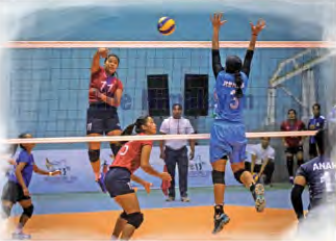
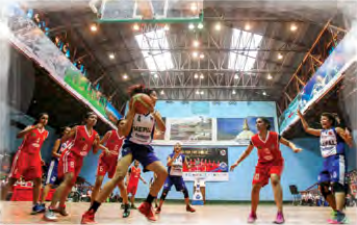
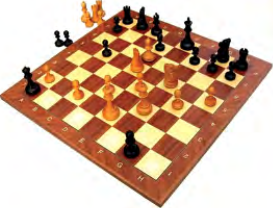
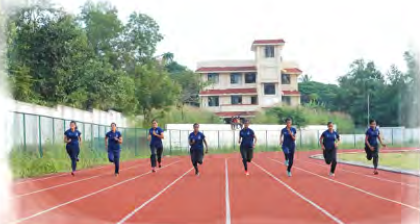
Volleyball and basketball are team sports played on a court. Running races belong to athletics, where each person competes to be fastest. Chess is played by two people sitting still. The four look very different, but each one is worth doing, and the reasons are much the same.
- Health: running, jumping and throwing keep the heart, lungs and muscles strong.
- Teamwork: in volleyball or basketball no one wins alone, so players learn to trust and support each other.
- Concentration: chess trains a player to plan several moves ahead and stay calm under pressure.
- Discipline: regular practice teaches patience, and losing teaches a player how to try again.
- Friendship and pride: matches bring schools, towns and whole countries together.
- Careers: talented players can become professional athletes, coaches or referees.
The Olympic Rings and the Flame
Two objects stand for the biggest sporting event on Earth. The first is a set of five coloured rings linked together. The second is a flame burning in a large bowl or carried in a torch. Together they represent the Olympic Games.
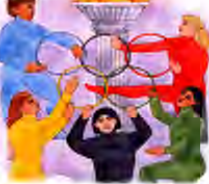
The five rings stand for the inhabited continents of the world joined in friendship, which is why they are linked and none stands alone. The flame reminds everyone where the Games began: in ancient Greece. How they began is told in an old Greek myth.
The Myth of the First Olympic Games
Myth: a very old traditional story, usually about gods and heroes, that people told to explain how something in their world began.
In ancient Greece there lived a man called Tantalus. He was half man and half god, because his father was Zeus, the greatest of the Greek gods. One day Zeus invited him to dinner on Mount Olympus, the home of the gods, high above the clouds. Tantalus was bursting with pride. He put on his embroidered robes, climbed to the very top of the mountain and enjoyed an exquisite dinner with the gods.
The next morning he decided he must return the invitation, and that he must serve the gods the thing he valued more than anything. Then he had a horrible idea. He killed his own son, Pelops, and served him to the gods as a stew. The gods, who see everything, were furious, because they hated human sacrifice. As punishment they sent Tantalus down to the underworld, where he had to stand in water up to his neck forever.
The gods brought Pelops back to life. As a special present they gave him a chariot pulled by snow-white horses that could run faster than the wind, and Zeus told him to go and find a kingdom, because he would become a great ruler. On the road Pelops met an old man dressed in rags. The old man told him about Elis, a kingdom where a beautiful princess called Hippodamia lived. Whoever married her would inherit her father's kingdom. There was one problem. To marry her, a man had to beat the old king in a chariot race. The winner got the princess and the kingdom. The loser got his head chopped off, and twelve men had already lost. Pelops was not afraid.
The Chariot Race
At the palace Pelops saw Hippodamia sitting beside the king, and her black eyes sparkled like stars when she saw the handsome young visitor. Pelops said he had come to woo the king's daughter. The king agreed to the race. When Pelops boasted that his horses could run faster than the wind, the king countered that his own could run faster than lightning. They were magic horses, a gift from Ares, the god of war, and the king had never lost a race.
That evening Hippodamia wandered near the stables and said dreamily to the stars that she wished her father would lose, just this once. A stable boy who had always adored her from afar overheard her. When she had gone, he took out the bronze pins that held the great wooden wheels on the king's chariot and put in pins made of candle wax.
Next morning crowds gathered on the lush green fields of Olympia. The horses galloped neck and neck. As the king whipped his horses to pull ahead, the wax pins melted in the heat, the wheels flew off, and the king was thrown to his death. Pelops had won, but he and Hippodamia were sad. The king had not been cruel; he had simply loved his daughter too much to give her away. So before their wedding they held a great funeral feast in his honour and invited heroes from all over Greece to compete in athletic games and races, in memory of the chariot race. Pelops decreed that such games should be held every four years, till the end of time.
The games took place on the fields of Olympia, so they came to be called the Olympic Games. They were held every four years because Pelops decreed it.
Notice how the storyteller builds tension. The same boast is repeated and raised: faster than the wind, then faster than lightning. Small details, like the wax pins and the heat of the sun, are planted early and pay off at the exact moment of the race. The story is gruesome at the start and ends happily, which is typical of Greek myths.
How the Games Were Lost and Found Again
Pelops and Hippodamia became wise and good rulers of Elis, and the games were held every four years on the fields of Olympia. Then, around 500 AD, a great earthquake knocked down the buildings and a huge flood covered the fields with water and mud. The fields stayed buried for almost 1,500 years. Since nobody could see them, people forgot the Games, and many believed they had never existed.
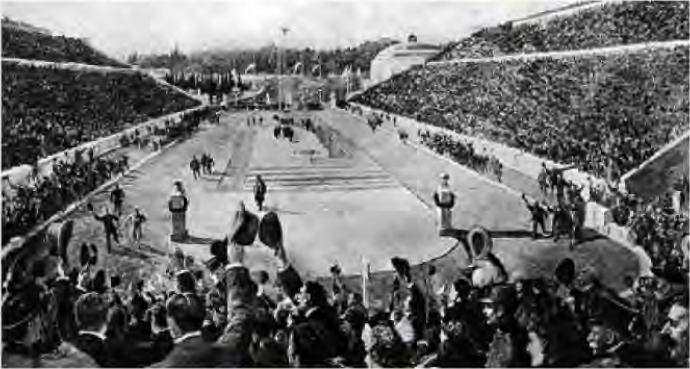
- 1875: archaeologists dug at just the right place and uncovered the ancient fields of Olympia.
- The discovery caused great rejoicing around the world.
- A Frenchman, Baron Pierre de Coubertin, helped to start the Olympic Games once again.
- Today, every four years, athletes from all over the world meet to compete in a spirit of peace and friendship.
- The Games are held in a different country each time.
- An Olympic flame, lit from the rays of the sun on the Olympic fields in Greece, burns in the stadium until the Games end.
Reading Carefully: True, False or Not Given
A common reading task gives you statements and asks you to judge each one against a passage. There are three possible answers, and the hardest skill is telling the second from the third.
True: the passage says the same thing, even if it uses different words.
False: the passage says the opposite, or says something that cannot be true at the same time.
Not Given: the passage does not tell you either way. The statement may be true in real life, but the passage is silent about it.
- "Pelops's horses were snow-white." True: the gods gave him a team of snow-white horses.
- "The old king had lost several races before." False: he had never lost a race.
- "Hippodamia had a younger sister." Not Given: the story never mentions her family apart from her father.
Do not answer from your own knowledge or from what seems likely. If the passage does not say it, the answer is Not Given, however sensible the statement sounds.
Syllables and Word Stress
Syllable: a unit of sound with one vowel sound at its centre. "Stadium" has three syllables: sta, di, um.
Stressed syllable: the syllable in a word that is said louder, longer and a little higher than the others.
A dictionary shows stress with a small raised mark placed just before the stressed syllable, as in /ɪnˈherɪt/ for inherit. Stress changes how a word sounds, and putting it in the wrong place can make a word hard to recognise. In the table the stressed syllable is written in capital letters.
| Word | Syllables | Stress |
| invitation | 4 | in vi TA tion |
| embroidered | 3 | em BROI dered |
| exquisite | 3 | ex QUIS ite |
| furious | 3 | FU ri ous |
| inherit | 3 | in HER it |
| princess | 2 | prin CESS |
| beautiful | 3 | BEAU ti ful |
| carefully | 3 | CARE ful ly |
| marriage | 2 | MAR riage |
| earthquake | 2 | EARTH quake |
| stadium | 3 | STA di um |
| Olympic | 3 | o LYM pic |
| archaeologists | 5 | ar chae OL o gists |
British English stresses princess on the second syllable, while American English stresses the first. Exquisite is also heard with stress on the first syllable. Both patterns are correct; check which one your dictionary gives first.
Talking About What People Have Recently Done
When we talk about something a person has done in the recent past, and the time is not important, we use the present perfect. The question usually has recently, just or lately in it, and the answer uses has or have with the past participle.
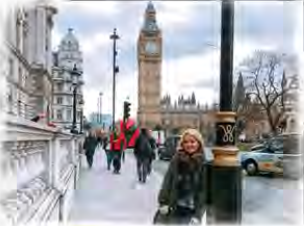
To report a friend's news to the class, keep to the same tense and add details: "Sujan has recently started a vegetable garden at home. He has planted tomatoes and chillies, and he has already picked his first cucumber."
Present Perfect and Present Perfect Continuous
Present perfect: has or have plus the past participle (has visited, have eaten). It links a past action to the present, usually by its result.
Present perfect continuous: has or have plus been plus the verb ending in ing (has been visiting, have been eating). It shows an action that started in the past and is still going on, or has only just stopped, and it puts weight on how long it lasted.
| Form | Present perfect | Present perfect continuous |
| Positive | She has trained hard. | She has been training hard. |
| Negative | She hasn't trained today. | She hasn't been training lately. |
| Question | Has she trained today? | How long has she been training? |
Use the present perfect for these situations.
- A finished action whose result matters now: "I have lost my racket, so I can't play."
- Experience in a whole life so far: "Have you ever watched a live cricket match?"
- How many times something has happened: "Our team has won three matches this season."
- With already, yet and just: "The match has just started." "We haven't scored yet."
- With verbs that describe states, together with for or since: "I have known him since Class 5."
Use the present perfect continuous for these situations.
- An action still going on, with for or since: "They have been practising since six o'clock."
- An action that has just stopped and left signs: "Your shoes are muddy. Have you been playing football?"
- Actions repeated over a recent period: "I have been going to the gym lately."
Compare these two sentences. "I have painted the fence" tells you the job is finished and the fence is ready. "I have been painting the fence" tells you how you spent your time, and the job may not be finished. The first answers the question What have you done? The second answers What have you been doing?
Never use either tense with a finished time such as yesterday, last year or in 2019. Write "I visited Pokhara last year", not "I have visited Pokhara last year".
Verbs such as know, like, believe, own and be are not normally used in the continuous. Write "I have known her for years", never "I have been knowing her for years".
Building a Paragraph
Paragraph: a group of sentences that develops one main idea.
Topic sentence: the sentence, usually the first, that states the main idea of the paragraph.
Supporting sentences: the sentences in the middle that explain, prove or give examples of the main idea.
Concluding sentence: the last sentence, which closes the paragraph by returning to the main idea in fresh words.
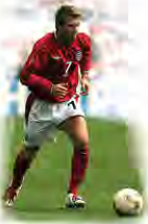
A paragraph about the English footballer David Beckham shows the pattern clearly. It opens by saying that he became a popular player in the late 1990s. Every sentence after that supports that idea: his fame at Manchester United, his success at Real Madrid in Spain, his dangerous free kicks and long passing, and his leadership as England's captain at the 2002 World Cup. It closes by saying that he is still loved by many even after his retirement. The last sentence echoes the first, because both are about his popularity, but it looks forward instead of back.
Here is a model paragraph about another player, with each part named.
- Topic sentence: Argentine footballer Lionel Messi is widely seen as one of the greatest players the game has known.
- Supporting sentence: He joined the youth academy of Barcelona as a boy of thirteen and grew up to become the club's star.
- Supporting sentence: Fans admire his close control of the ball, his quick changes of direction and his powerful left foot.
- Supporting sentence: He scored more goals for Barcelona than any other player in the club's history.
- Supporting sentence: In 2022 he captained Argentina to victory in the World Cup in Qatar.
- Concluding sentence: For millions of young players, Messi shows what talent can achieve when it is joined to years of hard work.
Test every supporting sentence by asking: does this help prove my topic sentence? If not, it belongs in a different paragraph.
The World's Most Popular Sports
Sports are popular for several reasons. Many people play to keep healthy. Others play for recreation, simply for fun in their free time. Even more people love sport as spectators, without playing at all. Since time immemorial, humans have been awed and inspired by athletes who perform tremendous feats of strength and skill. The table ranks the ten sports with the largest followings in the world.
| Sport | Estimated followers | Origin | Where it is most popular |
| Football (soccer) | 4 billion | England, 19th century; similar games in China about 2,000 years ago | Europe, Central and South America, Africa |
| Cricket | 2.5 billion | Britain | UK, India, Pakistan, Australia |
| Hockey (field and ice) | 2 billion | Not stated | Field: Europe, Africa, Asia, Australia. Ice: Canada, US, Northern Europe |
| Tennis | 1 billion | Not stated | Followed all around the world |
| Volleyball | 900 million | Not stated | North America, Western Europe; also Asia, Australia, South America |
| Table tennis (Ping Pong) | 875 million | England, early 20th century | Especially Asia; also Europe, Africa, the Americas |
| Basketball | 825 million | US, late 19th century, by James Naismith | Worldwide |
| Baseball | 500 million | US, descended from rounders and cricket | US, East Asia, Latin America |
| Rugby | 475 million | England | UK, Australia, New Zealand |
| Golf | 450 million | Scotland, 15th century | Western Europe, East Asia, North America |
Football owes its top place partly to cost. Unlike sports that need expensive equipment, all it needs is a ball and your feet, so anyone, rich or poor, can play. Basketball is popular for the same reason: two baskets and a ball are enough, which makes it accessible regardless of class. In basketball two teams dribble the ball up a court and shoot it into a raised, hoop-shaped net.
Cricket and baseball look alike, since both use two teams, a bat, a large field and runs. The difference lies at the centre. Cricket has a long rectangular pitch where the ball is bowled to a batsman. Baseball has a mound at the centre of a diamond, from which the ball is thrown to a batter standing at home plate. Baseball, America's national pastime, is thought to have grown out of the English games rounders and cricket.
Two sports change with the place they are played. Hockey is played on ice and on a field; players use a hockey stick to put the ball into the other team's net, and field hockey usually has no body contact of the kind called checking. Volleyball has a regular form with normally six players a side and a beach form, played on sand, with only two players a side. In both, teams on either side of a raised net try to volley the ball onto the ground of the other side.
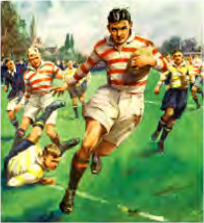
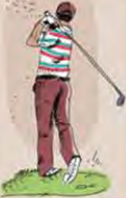
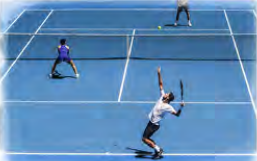
In tennis, players hit the ball with a racket across an elongated net so that it either passes their opponent or bounces twice on the opponent's side; stars such as Roger Federer and Serena Williams are household names. Rugby is a contact sport full of tackling, in which teams kick, carry or pass the ball over the goal line. American football players wear heavy padding and hard helmets, but rugby players wear very little protection, which makes injury the main risk. In golf, players try to put a small ball into a hole in the fewest strokes. The game began in Scotland, but the word golf comes from the Dutch word kolf or kolve, meaning club.
Listening to a Football News Report
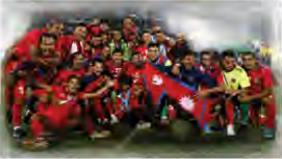
Before listening, think about sport at home. Football and cricket are the most followed sports in Nepal, and volleyball was declared the national game in 2017. The listening task is a news report about a football tournament in which Nepal and Bangladesh reach the final. Teams from Kyrgyzstan also played in it.
A fill in the blanks task is easier when you predict the kind of word each gap needs before the recording starts. Follow this order.
- Read every sentence first and underline the words on each side of the gap.
- Decide what kind of word fits: a name, a number, a place, a result or a describing word.
- Listen for the words around the gap; the answer comes right after them.
- Write short answers while listening and correct your spelling afterwards.
- Listen a second time to check every answer.
Applied to this report, the gaps ask for the following kinds of information.
- (a) The name of the tournament, a proper noun that may include a year or the word cup.
- (b) A word describing how Nepal's Saturday match against Bangladesh ended.
- (c) The stage of the tournament Nepal reached without scoring.
- (d) A word beginning with a vowel sound, because an comes before it. A goal for Bangladesh scored by a player from Kyrgyzstan points to one special kind of goal; listen to confirm it.
- (e) The name of Nepal's coach.
- (f) The name of the stadium or ground where the final will be played.
The True, False or Not Given statements that follow use the same rules as in reading. Judge them only by what the reporter says. Some can be checked against the sentences you have already completed: if Nepal reached the final without scoring a goal, a statement saying Nepal won a match 1-0 cannot be true.
The Passive Voice
Active voice: the subject does the action. "The farmers are ploughing the field."
Passive voice: the subject receives the action. It is formed with a form of be plus the past participle. "The field is being ploughed by the farmers."
Agent: the doer of the action in a passive sentence, introduced by by. It is left out when the doer is unknown, obvious or unimportant.
We use the passive when the action or the thing it happens to matters more than who did it. "The bridge was built last year" is about the bridge, and the builders are not important. To change an active sentence into the passive, follow these steps.
- Find the object of the active verb: in "Rita wrote the letter" it is the letter.
- Make that object the subject of the new sentence: The letter.
- Put be into the same tense as the active verb: wrote is simple past, so use was.
- Add the past participle of the main verb: was written.
- Add by and the agent only if it matters: The letter was written by Rita.
| Tense | Active | Passive |
| Simple present | People admire this picture. | This picture is admired. |
| Present continuous | They are repairing the road. | The road is being repaired. |
| Present perfect | The bird has built a nest. | A nest has been built by the bird. |
| Simple past | People built the bridge last year. | The bridge was built last year. |
| Past continuous | She was cleaning the room. | The room was being cleaned. |
| Past perfect | They had sold the tickets. | The tickets had been sold. |
| Simple future | They will forget this story. | This story will be forgotten. |
| Modal | You must answer all the questions. | All the questions must be answered. |
| Modal perfect | Someone might have stolen it. | It might have been stolen. |
Questions, commands and reported beliefs follow special patterns.
- Yes or no question: "Can anybody solve this problem?" becomes "Can this problem be solved?"
- Who question: "Who wrote this poem?" becomes "By whom was this poem written?"
- Wh question: "How do people trap a tiger?" becomes "How is a tiger trapped?"
- Command with let: "Let the mechanic repair my bike" becomes "Let my bike be repaired by the mechanic."
- Reported belief: "People say that he is honest" becomes "It is said that he is honest" or "He is said to be honest."
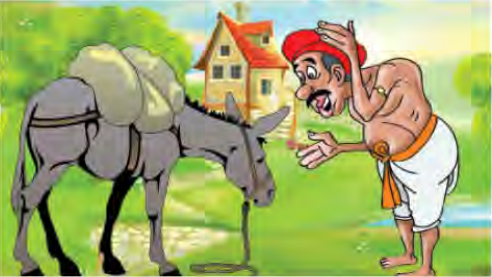
An old fable shows active and passive side by side. A man wanted to buy a donkey. He was allowed to take one home on trial. In his stable the newcomer at once chose to stand beside the laziest, greediest donkey there, so the man led it straight back. The owner was surprised to see it so soon. The man explained that he could already see what sort of beast it was from the companion it had chosen. Was allowed and was surprised are passive; wanted, chose and led are active.
Only verbs with an object can be made passive. Happen, arrive, sleep and die have no object, so "The accident happened" has no passive form. Never drop be either: "A nest has built" is wrong, "A nest has been built" is right.
Writing a Dialogue About Sports Day
A dialogue is a written conversation. Write each speaker's name, then a colon, then the words spoken, with no quotation marks. Keep the turns short and natural, and make the speakers react to each other rather than take turns making speeches. A dialogue about a school sports day or sports week should cover when and where it happens, the events, who takes part and how prizes are given.
Making a Pamphlet About a Sport
Pamphlet: a short printed sheet, often folded, that gives information about one subject in a clear and attractive way.
- Choose the sport you like most and collect facts about it from books, newspapers and reliable websites.
- Give the pamphlet a bold title and a short opening line that makes readers curious.
- Arrange the facts under small headings: history, rules, equipment, famous players, and where it is played in Nepal.
- Write in short sentences and bullet points, because a pamphlet is read quickly.
- Add pictures, drawings and labelled illustrations, such as a sketch of the court or field.
- End with a line that invites the reader to try the sport or join a club.
Facts About the English Language
English is spoken widely on six continents. It is the main language of the US, Britain, Canada, Australia, Ireland, New Zealand and several Caribbean and Pacific island nations, and an official language of India, the Philippines and many African countries south of the Sahara. It is one of the most widely spoken languages and the most widely taught foreign language in the world.
Its history began when the Jutes, Angles and Saxons moved from Germany and Denmark to Britain in the 5th and 6th centuries. The Norman Conquest of 1066 brought in many French words, Greek and Latin words entered in the 15th century, and Modern English is usually dated from 1500. English borrows words easily and keeps coining new ones for new technology. It is now so ubiquitous that every airline pilot, whatever their native language, must be able to communicate in English.
| Language | Words English has borrowed from it |
| Latin | agriculture, language, justice, science, forum, circus, religion, city |
| French | art, dance, jewel, painting, ballet, government, salon, brigade, infantry |
| Greek | phobia, academy, siren, lexicon, muse, democracy, psyche, atlas, biology, comedy, tragedy |
| German | blitz, kindergarten, poodle, noodle, pretzel, sauerkraut, zeppelin |
| Italian | opera, piano, broccoli, spaghetti, pesto, viola, pizza, cappuccino, latte |
| Spanish | canyon, tornado, tortilla, barricade, guitar |
| Dutch | cruise, dock, dyke, yacht, easel, landscape, sketch, cookie |
| Scandinavian | ski, saga, sauna, slalom |
| Japanese | kimono, sushi, tsunami |
| Arabic | algebra, zero, zenith, giraffe, sultan |
Golf is a good example of borrowing: the game is Scottish, but its name is Dutch.
The full lesson is waiting for you
The notes are free to read in full. A free account opens the rest of the practice, and tracks your progress and confidence score for every subject. Presentations and videos need approval from Learn Yeti.