From flat shapes to solid objects
A rectangle, a square or a circle drawn in a copybook is called a plane shape. Such a shape has length and breadth only, so it cannot be picked up with the hand. The brick, the dice, the glass, the ball and the chalk box around us are different. They can be held, and they take up space. Objects like these are called solid objects. A solid object has height as well as length and breadth, so it has three measurements.
There is something worth noticing here. The outside of many solid objects is made of the very plane shapes we already know. Which plane shape builds which solid is set out below.
| Flat surface | Solid object |
| Rectangle | Cuboid |
| Square | Cube |
| Circle | Cylinder, cone |
Every face of a brick, a book or a chalk box is a rectangle, so each of these is a cuboid. Every face of a dice or a sugar cube is a square, so each of these is a cube. These two shapes are where the study of solids begins.
Faces, edges and vertices
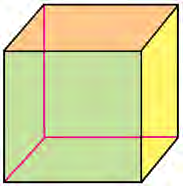
Take a chalk box in your hand. On the outside of the box you find smooth, flat faces. Where two of those faces meet you find a straight line like a ridge. Where three of those ridges come together you find a sharp point. These three parts each have their own name, and those names are used right through this topic.
A flat surface of a solid object is called a face of that solid. It is shown by the English letter F.
The line where two faces join is called an edge. It is shown by the English letter E.
The point where two or more edges meet is called a vertex, or a corner, of that solid. It is shown by the English letter V.
Counting on a cube and a cuboid
Now turn the chalk box around and count. Two faces at the top and bottom, two at the front and back, two at the left and right. That makes six faces. Four edges around the bottom square, four around the top square, and four upright edges joining top to bottom. That makes twelve edges. Four corners at the bottom and four at the top, which makes eight vertices. Counting a cube gives exactly the same three numbers.
| Part | In a cube | In a cuboid |
| Faces (F) | 6 | 6 |
| Edges (E) | 12 | 12 |
| Vertices (V) | 8 | 8 |
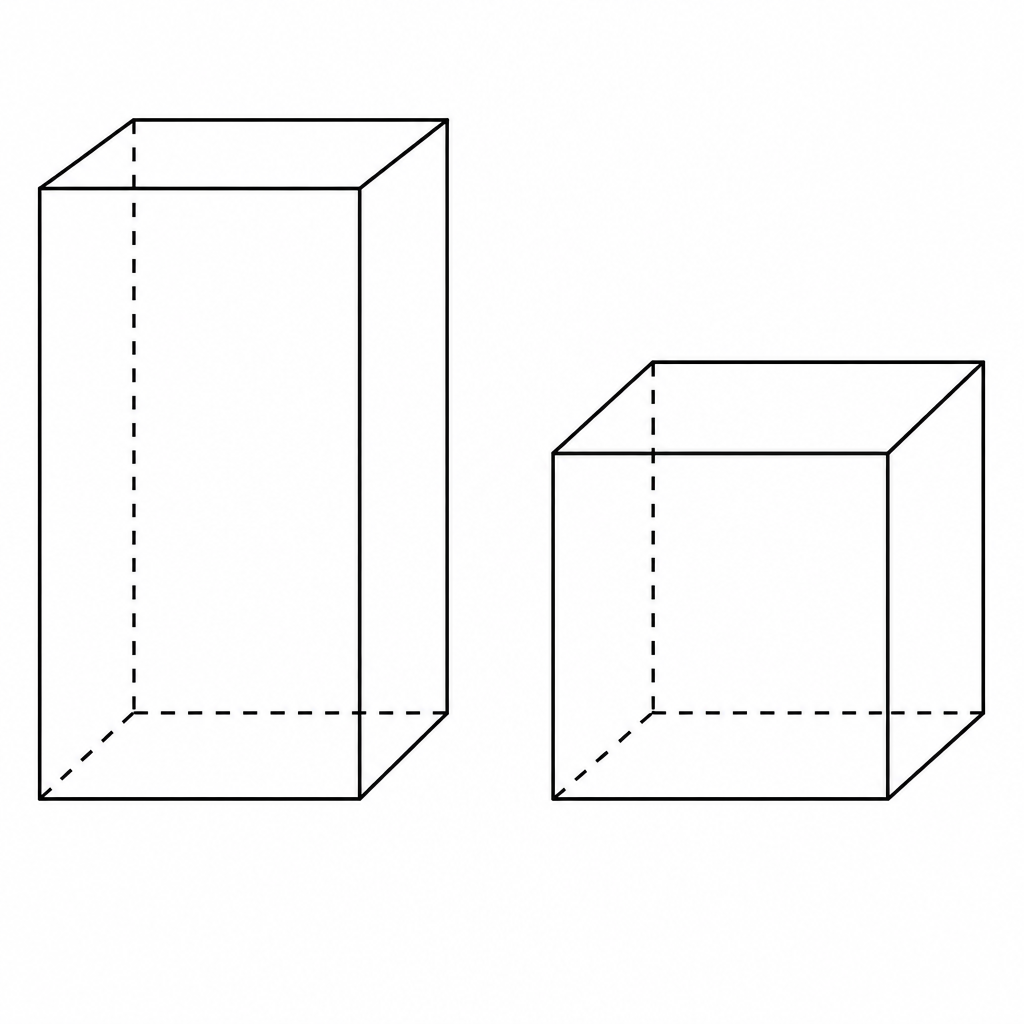
A solid whose six flat faces are all rectangles is called a cuboid. Its length, breadth and height may all be different.
A solid whose six flat faces are all squares, and whose twelve edges are all the same length, is called a cube.
The relation between face, edge and vertex
A neat relation hides among these three numbers. Add the number of vertices to the number of faces, then take the number of edges away from that total. For a cube this gives \( 8 + 6 = 14 \) and then \( 14 - 12 = 2 \). Doing the same on a cuboid also gives 2. Because the answer is always 2, the pattern can be written as a formula.
\[ V - E + F = 2 \]
For any cube or cuboid, if V is the number of vertices, E the number of edges and F the number of faces, then \( V - E + F = 2 \). When two of the three numbers are known, the third can be found from this relation.
This relation is for solids whose faces are flat and whose edges are straight. A sphere, a cylinder and a cone have curved surfaces, so do not try to apply it to them.
Using the relation to find a missing number
A chalk box has 6 faces and 8 vertices. Let us find how many edges it has.
Step 1: The number of faces of the chalk box is:
\[ F = 6 \]
Step 2: The number of vertices of the chalk box is:
\[ V = 8 \]
Step 3: The relation joining vertices, edges and faces is:
\[ V - E + F = 2 \]
Step 4: Putting 8 in place of V and 6 in place of F gives:
\[ 8 - E + 6 = 2 \]
Step 5: Since 8 added to 6 makes 14, the statement becomes:
\[ 14 - E = 2 \]
Step 6: Taking 2 away from 14 gives the number of edges:
\[ E = 14 - 2 = 12 \]
So the chalk box has 12 edges. Counting the edges on a real box also gives 12, so the answer checks out.
Now take a second example. A cube shaped counter has 12 edges in all. How many vertices must it have if it is to have 6 flat faces?
Step 1: Of the two numbers given, the number of edges is:
\[ E = 12 \]
Step 2: The number of faces is:
\[ F = 6 \]
Step 3: Putting 12 in place of E and 6 in place of F in the relation gives:
\[ V - 12 + 6 = 2 \]
Step 4: Since 12 less 6 is 6, the statement becomes:
\[ V - 6 = 2 \]
Step 5: Adding 6 to both sides gives the number of vertices:
\[ V = 2 + 6 = 8 \]
So the counter must have 8 vertices. Whichever one of the three numbers is missing, it can be found in exactly this way.
Building a skeleton model
These three parts are understood best by building them yourself. To build a skeleton model of a cube you need twelve sticks of equal length and eight small pieces of potato or some other soft material.
- Use four sticks and four pieces of potato to make the bottom square.
- Make a second square just like it with another four sticks and four pieces.
- Set the first square on the table and push the remaining four sticks upright into its four corners.
- Fit the potato pieces of the second square onto the upper ends of those upright sticks.
- Count the faces, edges and vertices of the shape you have made, and check your counts with your friends.
The ends of sticks, bamboo and reed are sharp. Never point them at anyone, and keep them well away from faces and eyes while you work.
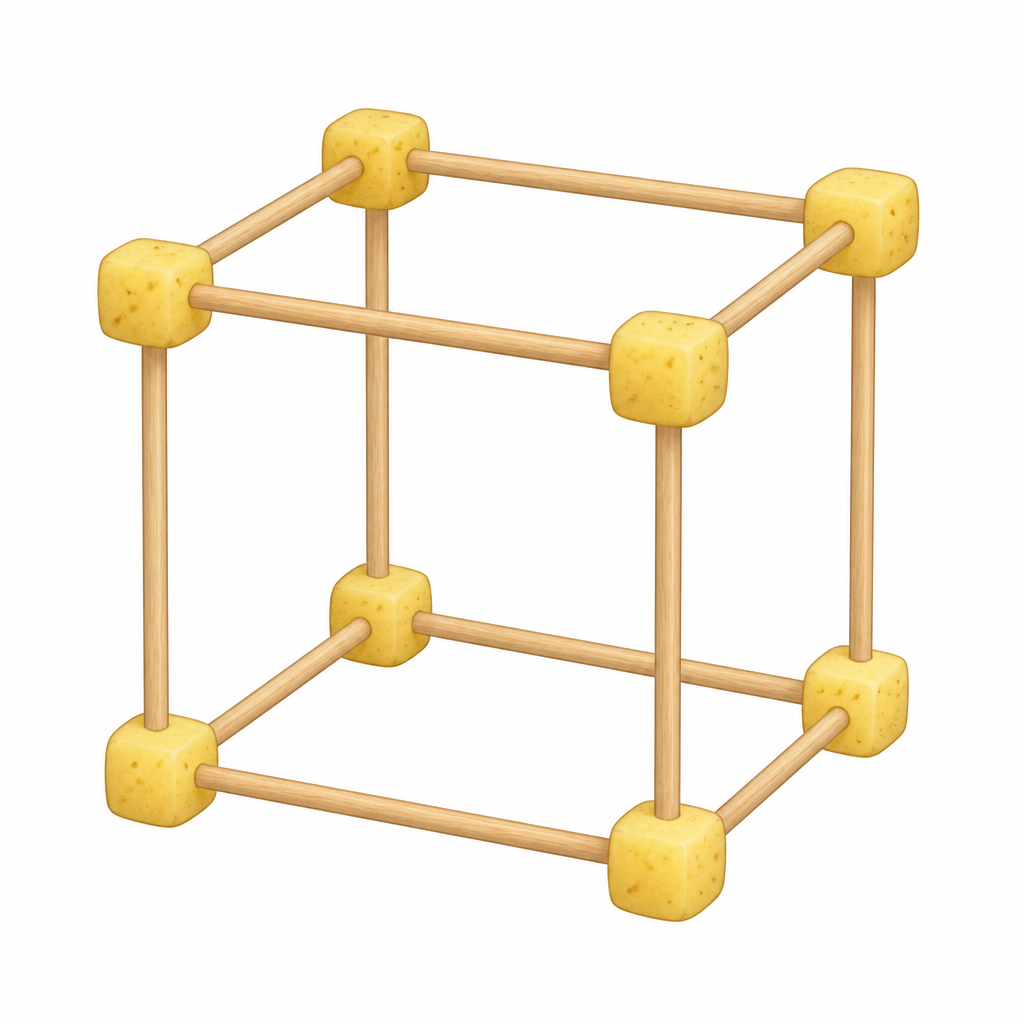
A skeleton cuboid is built in the same way, but the pieces are not all equal. From twelve drinking straws or pieces of stalk, take eight of one length and four of a different length. Make two squares from the eight equal pieces, then join the vertices of those two squares with the four pieces of the other length. This shape also turns out to have 6 faces, 12 edges and 8 vertices.
How a cube differs from a cuboid
The counting is the same for both, but the two shapes are not the same. The difference lies in the shape of the faces and the length of the edges.
| Basis | Cube | Cuboid |
| Shape of the faces | All six are squares | All six are rectangles |
| Length of edges | All twelve are equal | Length, breadth and height may differ |
| Examples | Dice, sugar cube | Brick, book, chalk box |
When all the edges of a cuboid are of equal length, that cuboid is called a cube. So every cube is a special kind of cuboid.
Cylinder, sphere and cone
Not every solid has flat faces. Run a hand over a drinking glass, a football or an ice cream holder and you feel a surface that bends around. Such a surface is called a curved surface. Objects like these can be rolled, while a brick or a chalk box cannot.
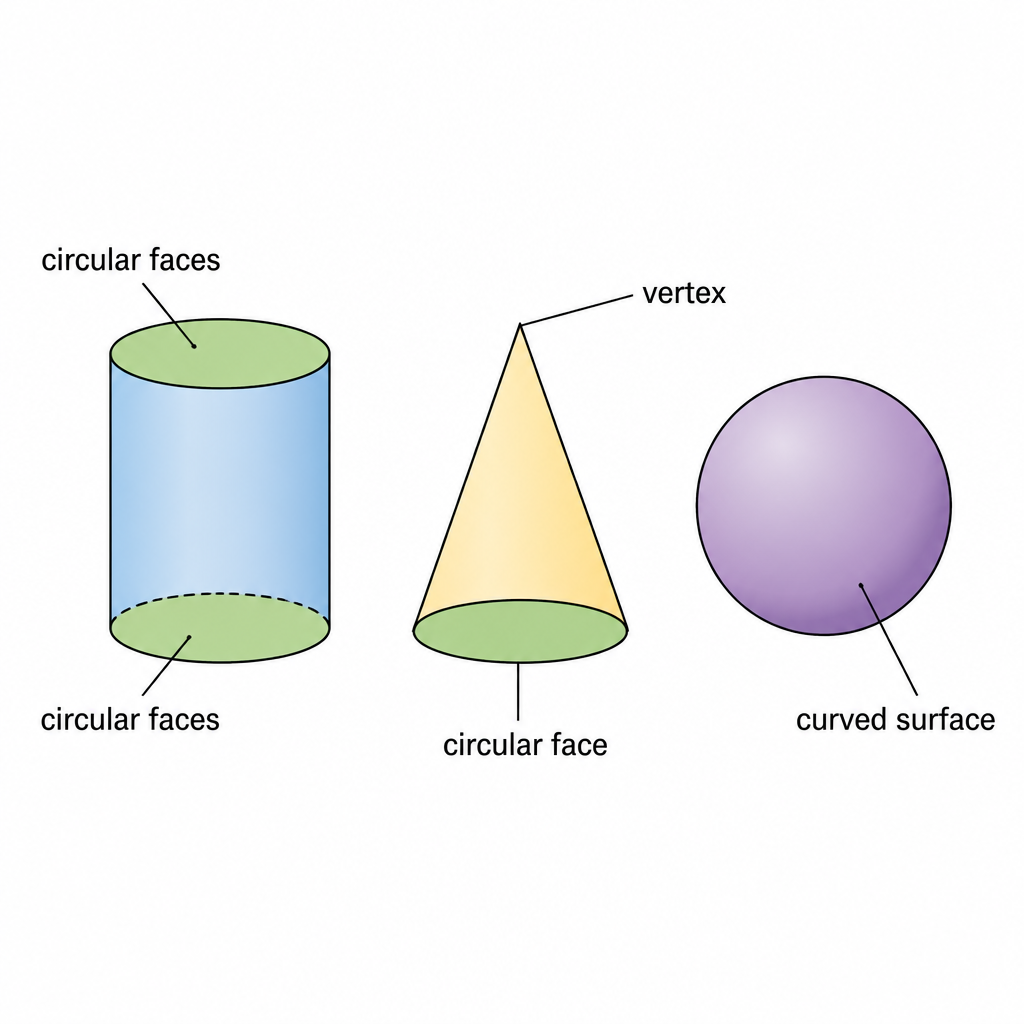
A solid with two equal, parallel circular faces and one curved surface is called a cylinder.
A solid with one vertex and one circular base is called a cone.
A geometrical solid that has no flat surface and no vertex at all is called a sphere.
Cylinder: two circular faces, one curved surface, no vertex.
Cone: one circular face, one curved surface, one vertex.
Sphere: no flat face at all, one curved surface, no vertex.
A cylinder has no straight edges, and the rims of its two circular faces must not be counted as vertices. In the same way a sphere has no face and no vertex at all, so the count of its flat faces is zero.
Recognising these solids around us
To decide what shape an object is, ask three questions. How many flat faces does it have? Is there a curved surface? Is there a vertex? Apply that method to the three objects below.
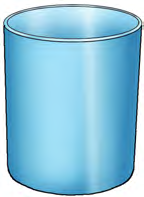
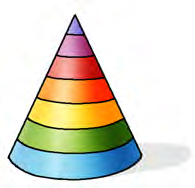
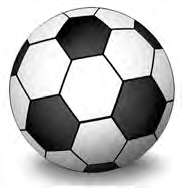
- The glass has two circular faces and one curved surface, and no vertex. So it is a cylinder.
- The second object has one circular face, one curved surface and one vertex. So it is a cone.
- The ball has no flat surface and no vertex. So it is a sphere.
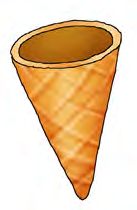
Ask the same three questions about the objects below. The work is complete only when the answer is written with its reason.
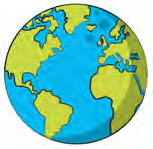
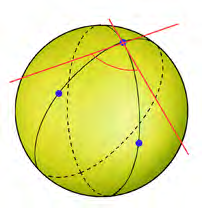
Naming the faces of a cuboid
When the eight vertices of a cuboid are named with the letters A, B, C, D, E, F, G and H, each face can be named by its four letters. Faces that lie opposite each other are always parallel, so a cuboid has three pairs of parallel faces.
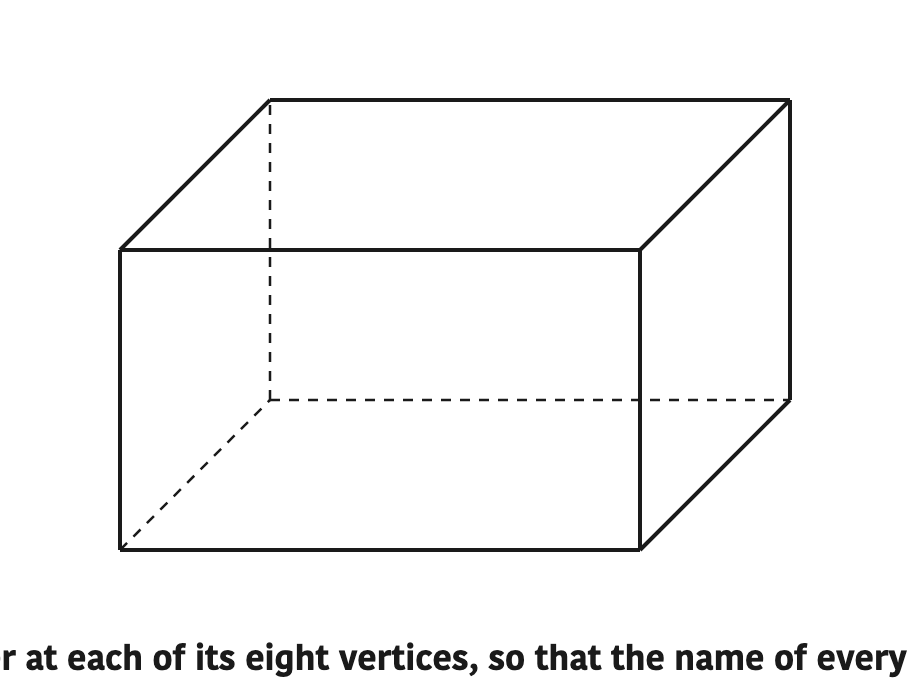
- The top face ABCD and the bottom face EFGH make one pair of parallel faces.
- The front face DCGH and the back face ABFE make a second pair of parallel faces.
- The right face BCGF and the left face ADHE make a third pair of parallel faces.
If the length, breadth and height of this same cuboid are made equal, every face turns into a square and the shape becomes a cube. That is why a cube is described as a special form of a cuboid.
The full lesson is waiting for you
Create a free account to unlock activities, practice tests, presentations and videos - and to track your progress and confidence score for every subject.
An object that has length, breadth and height and takes up space is called a solid object.
11 more points to remember - sign in to see the rest.
Question 1 of 13