Guessing What Comes Next
When you look carefully at what is happening now, you can often say what will happen next. Dark clouds tell you rain is coming. A runner one step ahead at the tape tells you who is about to win. This skill is called predicting, and English has special verb forms for it. This unit teaches you to predict, to read and talk about the weather, and to use the future forms will and going to correctly.
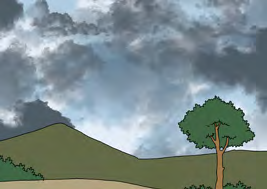
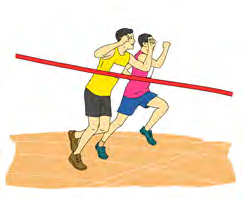
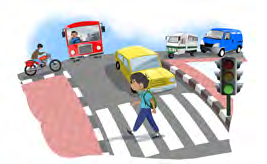
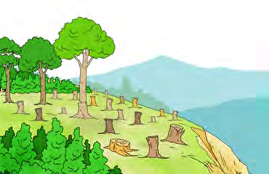
People who refuse to see such signs pay for it. Rudyard Kipling wrote a song about villagers whose fathers built dykes, strong walls that hold back flood water. The people were warned again and again that the dykes were weak, but they delayed, and the flood came.
Now we can only wait till the day,wait and apportion our shame.These are the dykes our fathers left,but we would not look to the same.Time and again were we warned of the dykes,time and again we delayed:Now, it may fall, we have slain our sons,as our fathers we have betrayed.
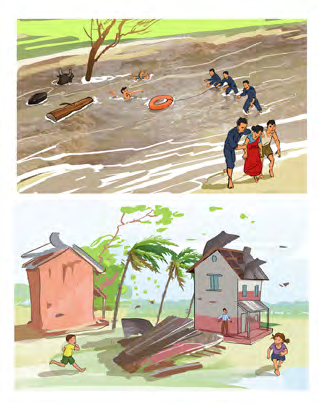
The song is really about all of us. If we do not look after the things that protect us, whether a dyke, a forest or the air itself, the harm falls on our own children. Try the skill yourself: tell a friend what your village or city will look like after ten years. For example, In ten years my town will have many more houses. The roads are going to be more crowded. If we keep cutting trees, the hills will be bare.
A prediction is a sentence about the future built on a clue you can see now. Look, find the clue, then say what will happen.
Human and the Environment
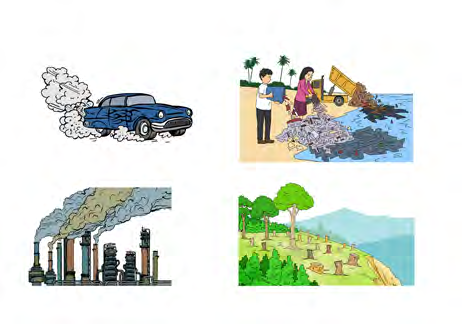
No part of the environment has escaped the effects of pollution. All over the world, the land, the air and the water have been contaminated by a growing amount of waste materials and substances. This waste comes from three main sources: factories, homes and vehicles. Sometimes the waste is only an eyesore, something ugly that spoils the beauty of our surroundings. In other cases it is a serious threat to our health, and it can even cause death.
The most dangerous waste of all comes from factories. Industrial waste often contains toxic substances, poisons strong enough to kill plants and animals. Where there is no proper government control, factories simply pour these substances into rivers, and their chimneys fill the atmosphere with poisonous fumes.
In towns and cities, people burn fossil fuels for heating. The fossil fuels are oil, coal and gas, and burning them releases large amounts of carbon dioxide into the atmosphere. Some cities have been declared smokeless zones, yet air pollution remains a major problem there, because the exhaust fumes from vehicles on the roads never stop.
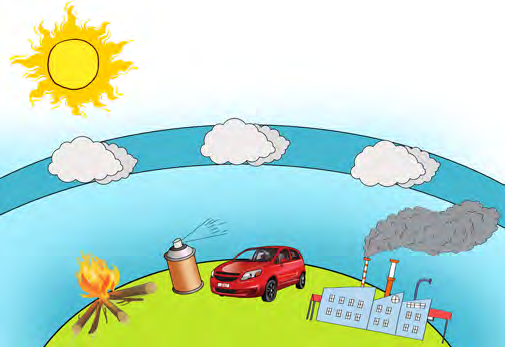
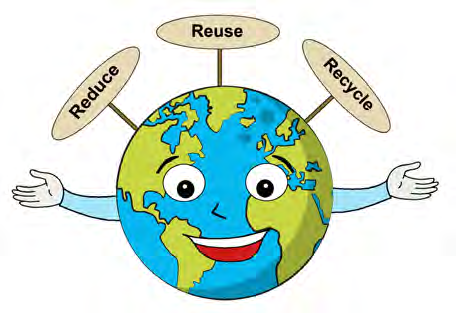
Each of us is guilty of polluting the environment to some extent. Almost everything we buy today comes in a container or packaging made of plastic, glass or aluminium, and we usually throw it away. Attempts are now being made to encourage factories to recycle these materials, that is, to treat used things so they can be used again.
How long can this pollution continue? Scientists warn that the rising amount of carbon dioxide in the atmosphere may soon have disastrous effects. They fear it will raise the average temperature around the world and melt the polar ice caps. If that happens, the level of the oceans will rise by four to six metres, and vast populated areas of the planet will be covered by water. Can we afford such a risk simply by carrying on polluting?
Words That Carry the Reading
Contaminated: made impure or dirty. The river water is contaminated, so nobody should drink it.
Threat: a danger, something that may cause harm. Dirty air is a threat to our health.
Toxic: poisonous. Toxic waste from factories can kill fish in the river.
Fumes: harmful smoke or gas. The exhaust fumes from old buses made everyone cough.
Guilty: responsible for a specific wrong doing. I felt guilty when I threw the plastic wrapper on the road.
Disastrous: causing great damage. A disastrous flood destroyed the crops of the whole valley.
Reading a Weather Forecast
A weather forecast is a short report that says what the weather is expected to be like on the coming days. You find one in a newspaper, on television, on the radio and on the internet.
A forecast rarely writes long sentences. It shows a small symbol for each day, and the reader turns the symbol into a weather word. Here is one full week of forecast, written out in words.
| Day and date | Weather |
| Sunday, June 20 | sunny |
| Monday, June 21 | cloudy |
| Tuesday, June 22 | rainy |
| Wednesday, June 23 | snowy |
| Thursday, June 24 | windy |
| Friday, June 25 | hot |
| Saturday, June 26 | cold |
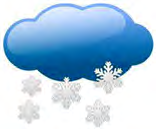
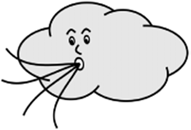
To talk about the forecast, use this pattern: It is + weather word + on + day. So you say, It is snowy on Wednesday. It is rainy on Tuesday. You can also begin with the day: On Friday, it is hot. On Saturday, it is cold. Both orders are correct.
Weather is the condition of the air and sky at a particular time or on a particular day: sunny, cloudy, rainy, snowy, windy, hot or cold.
A season is a long part of the year with its own kind of weather. The seasons are spring, summer, fall (also called autumn) and winter.
| Weather words | Season words |
| hot, cold, sunny, cloudy, rainy, snowy, windy | spring, summer, fall (autumn), winter |
Do not mix weather with season. Winter is a season; cold is the weather. Summer is a season; hot and sunny are the weather. A season lasts for months, but the weather can change in a single day.
Talking About the Weather
Weather is the easiest thing in the world to talk about, because everyone is standing under the same sky. Read this conversation aloud with a partner, one of you as Ramesh and one as Ramila, and act it out with your voices and hands.
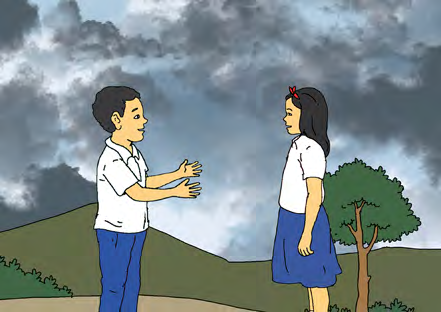
Notice what the two speakers do. They name what they can feel and see now, and then they predict. You can build the same kind of short conversation from any situation. Take the situation, add what you notice, then add what you think will happen.
- It's raining heavily. I think the streets will be flooded by evening.
- Gita studies very well. She is going to come first in the exam.
- It's very windy. The kites will fly high today.
- He looks tired. He is going to fall asleep in a few minutes.
- She looks happy. I guess she will share some good news with us.
Listening to a Weather Report
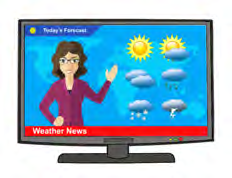
On radio and television, the weather report gives numbers, and a good listener catches them. The temperature of a city is given twice: the maximum, the highest of the day, and the minimum, the lowest of the day, both measured in degrees Celsius. Rainfall is measured in millimetres. A report on the evening news moves quickly from city to city, so keep your pencil ready and note each number beside its city.
These are the kinds of sentences you should be able to catch from one report on cities of Nepal:
- Biratnagar recorded a maximum temperature of 32 degrees Celsius with no rainfall.
- Kathmandu had a maximum of 26 degrees Celsius and a minimum of 13 degrees Celsius.
- Pokhara had a minimum of 12 degrees Celsius and 20 millimetres of rainfall.
- Butwal was the hottest, with a maximum of 33 degrees Celsius and no rainfall.
- Janakpur had a minimum of 23 degrees Celsius with no rainfall.
- Birendranagar had a minimum of 13 degrees Celsius and 10 millimetres of rainfall.
Listen to the weather report on the radio or television this evening. Note down which place had the highest maximum temperature and which had the lowest minimum, and tell your class tomorrow.
Will and Going To
English has two everyday ways of talking about the future, and choosing between them is the grammar skill of this unit. Both point ahead in time, but they are chosen for different reasons.
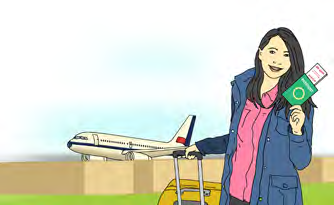
Will + base verb is used when you decide something at the moment of speaking, when you make an offer or a promise, and when you say what you think or guess will happen. Short form: I'll, she'll, it'll. Negative: will not, short form won't.
Study these three sentences. Oliver will be back soon: the speaker is guessing about the future. We won't be ready: a negative guess, using won't. Do you think it'll rain this afternoon? a question asking for someone's opinion about the future.
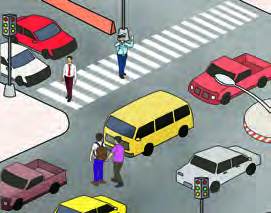
Going to + base verb (with am, is or are before it) is used when a plan was already made before speaking, and when you can see right now that something is about to happen.
Study these three sentences. We are going to watch a film, do you want to join us? the plan was made earlier. I'm going to clean my room: a decision already taken. Look! The bus is going to leave! the speaker can see it happening in front of them.
| Situation | Choose | Example |
| You decide at the moment of speaking | will | I forgot your drink! I'll go and get it now. |
| You make an offer or a promise | will | That's OK. I'll lend you mine. |
| You say what you think or guess | will | I'm sure you'll pass. |
| The plan was made earlier | going to | I'm going to clean my room. |
| You can see it is about to happen | going to | It's already 9:50! We're going to be late for school. |
Students often use will everywhere. Ask one question before you choose: is there a clue in front of my eyes, or a plan already made? If yes, use going to. If the idea was born this very second, as an offer, a promise or a sudden decision, use will. So it is I'll open the window, but We're going to be late.
Writing About the Future
Everything above now comes together on paper. To write a paragraph about changes that will occur in your school next year, begin with one sentence that names the topic, then give three or four predictions using will and going to, and close with one sentence of feeling. Here is a model. Next year our school is going to look quite different. The new building will be finished, so we will get a bigger library with more English storybooks. Our class is going to plant trees along the fence, and the bare playground will turn green. There will be a computer room too. I think next year will be the best year of our school.
You can also write plans as a simple list. Here are five things a student might do after the final exam:
- I will visit my grandparents in the village.
- I am going to learn to ride a bicycle.
- I will read two storybooks in English.
- I am going to help my mother in the kitchen garden.
- I will teach my little sister the English weather words.
Make a Pollution Scrapbook
Turn the reading into a project you can hold in your hands. A scrapbook of pictures teaches your class more than a lecture, because everyone can see the pollution you are talking about.
- Collect images or pictures that show any form of pollution: dirty rivers, smoking vehicles, burning rubbish, piles of plastic.
- Sort your pictures into three groups: causes of pollution, effects of pollution, and preventive measures.
- Paste them into a scrapbook and write one clear English sentence under each picture.
- Present your scrapbook to the class and explain what each picture shows.
Kinds of Sentences
Every sentence you spoke and wrote in this unit belongs to one of four kinds, sorted by the job it does.
A declarative sentence makes a statement and ends with a full stop. He is the leader of our group.
An interrogative sentence asks a question and ends with a question mark. What's your name? Do you like apples?
An imperative sentence gives a command, a request or an instruction. Drink enough water.
An exclamatory sentence expresses strong feeling and ends with an exclamation mark. Wow! What a beautiful garden it is!
The end mark is your quickest clue. A full stop closes a statement or a command, a question mark closes a question, and an exclamation mark closes a burst of feeling. Read a sentence aloud, ask what job it is doing, and the kind names itself.
The full lesson is waiting for you
Create a free account to unlock activities, practice tests, presentations and videos - and to track your progress and confidence score for every subject.
A prediction is a sentence about the future built on a clue you can see now.
11 more points to remember - sign in to see the rest.
Question 1 of 16