Everyday Actions Have Reasons
Everything people do has a reason behind it. Two boys pass a ball to each other because they enjoy the game and want to become better players. An old man crosses the road at the zebra crossing because that is the safe place to cross. A girl feeds fresh grass to her goat because the goat is hungry and she cares for it. When you can say the reason for an action, you are already using the most useful little word in this unit: because.
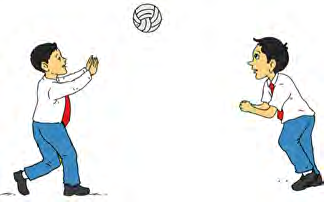
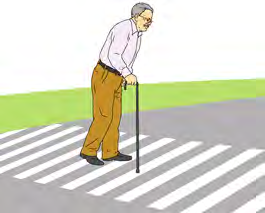
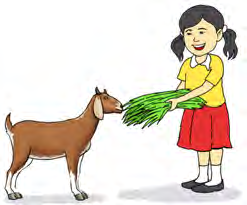
Try it with your own life. Why do you go to school? Why do you drink water? Why do you like your best friend? Each answer begins the same way: I go to school because I want to learn. I drink water because I am thirsty. Giving reasons like this is a skill you will practise in speaking, in grammar and in writing all through this unit.
A Poem About Passing Flowers
The American poet Robert Frost wrote about a small moment that everyone knows. You are travelling, you see something lovely out of the window, and it is gone before you can even name it. Read the poem aloud and listen to its rhymes: car and are, back and track, mind and find, those and close.
I often see flowers from a passing carThat are gone before I can tell what they are.I want to get out of the train and go backTo see what they were beside the track.Was something brushed across my mindThat no one on earth will ever find?Heaven gives its glimpses only to thoseNot in position to look too close.
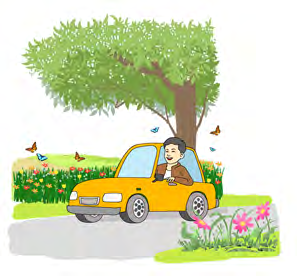
The speaker sees flowers from a moving car and wishes he could go back and look at them properly. Then he wonders if the most beautiful things are only ever seen for a moment. The last two lines carry the poem's thought: heaven gives its glimpses only to people who cannot stop and stare. Some beauty belongs to the quick look, not to the long study.
Tom Paints the Fence: A Play
This story is told as a play, adapted from The Adventures of Tom Sawyer by Mark Twain. The characters are Tom Sawyer, his Aunt Polly, and two boys named Ben and Billy. A play is written to be acted, so instead of long paragraphs you read the name of a speaker, a colon, and the words that speaker says.
A play is a story written to be performed by actors. It is made of dialogue, the words the characters speak, and it is divided into scenes.
A stage direction is an instruction printed in brackets and italics inside a play. It tells the actor what to do, not what to say. Example: (Tom looks at his hands.)
In Scene I, Aunt Polly is searching for Tom. He has been hiding in the closet, and the jam around his mouth tells her exactly what he was doing there. She reaches for a switch to punish him, but Tom is too quick for her.
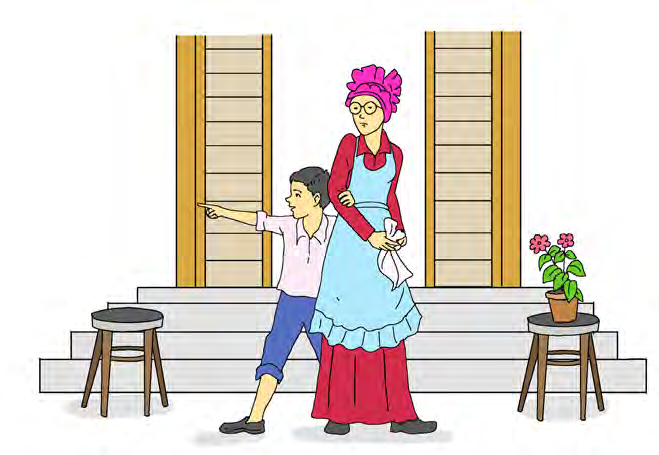
Aunt Polly turns to look, and Tom runs away. She stands surprised for a moment, and then she breaks into a laugh. She knows her nephew's tricks well, and she cannot stay angry with him for long.
In Scene II, Aunt Polly gives Tom a punishment instead: he must whitewash the whole fence. Tom hates the job, but when his friend Ben arrives, Tom pretends the work is a rare treat. He brushes away happily and asks whether a boy gets the chance to whitewash a fence every day. The trick works perfectly.
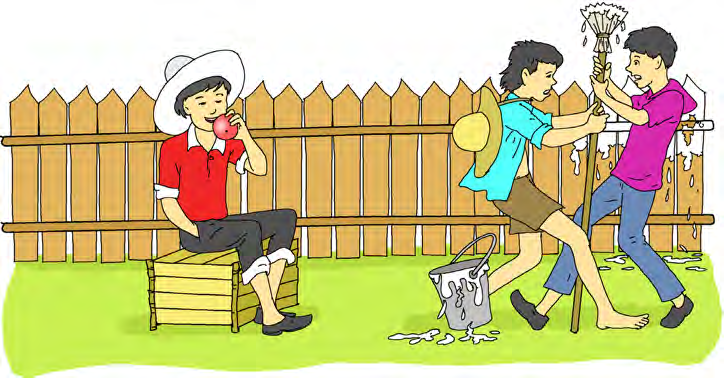
Now the trap is set. Ben pays an apple for the chance to work, and Tom sits down to eat it. When Billy arrives, he too begs for a turn, and soon the boys are even fighting over the brush. Tom calmly gives each boy his turn, the fence gets finished, and Aunt Polly is delighted. She calls Tom a good boy and lets them all go and play. The boys run to the river shouting Hurray, and only Tom knows who really did the work.
Tom's trick rests on one clever idea: if you make a job look like a privilege, people will beg to do it. The boys whitewashed the fence because Tom made the work seem like fun.
Words from the Play
| Word | Meaning |
| closet | a small room used for storing things |
| switch | a thin stick used for beating someone as punishment |
| whitewash | to paint a wall or fence white with a mixture of lime and water |
| fence | a wooden or wire barrier around a yard or field |
| jam | a sweet jelly made of fruits |
| surprised | amazed, not expecting what happened |
| interesting | enjoyable, holding your attention |
In this play, switch means a thin stick for punishing, not the electric switch on a wall. And closet means a small storing room, not only a cupboard for clothes. The play was written long ago, and these older meanings still appear in reading passages and exams.
Saying Why: Speaking with Reasons
When you speak with a friend, you do not only say what you like. You say why you like it. Read how Alisha and Aman do it. Each of them names a game, and each of them gives a reason with because.
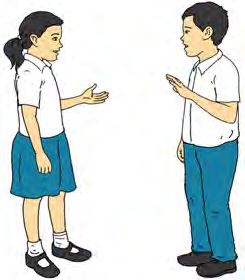
The pattern is simple. One person asks a question with Why, and the other answers with because and a full reason. Question: Why will you not come to school tomorrow? Answer: I won't come to school tomorrow because I have to go to hospital. Practise the same pattern with your own plans: not watching a movie because you must prepare for an exam, going to Kathmandu because you want to see your brother, going to dance class because you want to be a dancer, studying science because you want to be a doctor, going to a dentist because you must have a tooth taken out.
Listening for Facts: How an Earthquake Happens
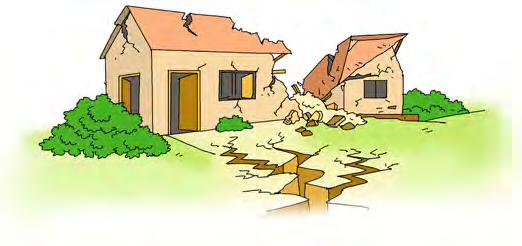
Good listening means catching exact facts, not just the general idea. A talk about earthquakes is a good test, because it is full of precise words. Earthquakes are caused by the breaking of underground rocks. When the rocks break, the pressure that was built up inside them is suddenly released, and seismic waves travel out and make the ground shake. The rocks continue to move until they get stuck again. Nepal knows this danger well: the Gorkha Earthquake of 2015 damaged houses across the country, cracking walls and splitting the ground.
The focus of an earthquake is the underground point where the rock breaks.
The epicentre of an earthquake is the point on the surface directly above the focus.
Because and Because Of
Both because and because of give a reason, but they are followed by different things. Compare these pairs. I want to play cricket. It makes me happy. Joined: I want to play cricket because it makes me happy. I didn't go to school. It rained. Joined: I didn't go to school because of the rain. The first joins with a full sentence; the second joins with a noun.
Because is followed by a full clause, a group of words with its own subject and verb. Example: We were hungry because we hadn't eaten anything all day.
Because of is followed by a noun or a noun phrase, never by a full sentence. Example: She is not happy because of her sickness.
- They are happy now because they have won the match. (a clause follows, so because)
- They are tired because of the heavy work. (a noun phrase follows, so because of)
- I am upset because you did not help me.
- Sunil is successful because of his hard labour.
Never put a full sentence after because of. It is wrong to write: I was late because of I missed the bus. Write either I was late because I missed the bus, or I was late because of the traffic. Before you choose, look at what comes next: a subject and a verb take because, a noun alone takes because of.
Volleyball: Our National Game
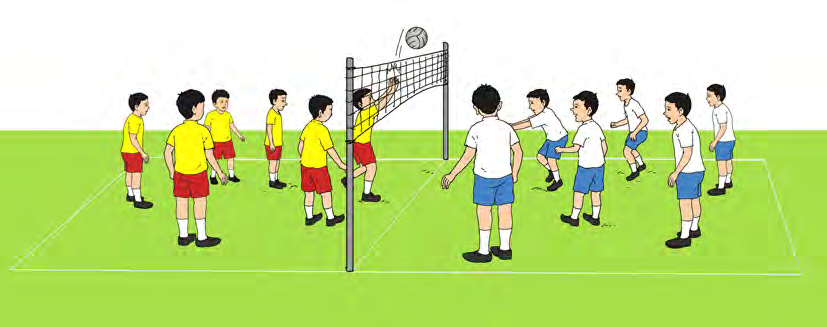
Volleyball is the national game of Nepal. It is widely played in every geographical region of the country, in the mountains, the hills and the Terai alike, because it does not need a big space for setting its court and because its rules are simple. A flat piece of ground, a net and a ball are enough for a village school or a city club.
It is a team sport played between two teams of six players each, so twelve players are on the court in a match. The teams are separated by a net. The net is positioned at 2.43 metres high in the men's category and 2.24 metres high in the women's category. The major target of each team is to get the highest score and win.
Play moves in rallies. A server starts a rally by serving the ball over the net into the opponent's side. Each team then tries to drop the ball on the opponent's court while following the rules, and a team is allowed only three smashes of the ball before it must send the ball back over the net. To score a point, a team must win a rally. Most volleyball games today use rally scoring and are played to 25 points. A team wins the game by scoring 25 points, but if both teams reach 25 points, the winner must lead the opponent by two more points.
A rally is one continuous passage of play, from the serve until the ball touches the ground or a team breaks a rule. Winning a rally scores a point.
A smash is a hard downward hit of the ball into the opponent's court. A team may touch the ball at most three times before sending it over the net.
Writing About a Game
One useful piece of writing is a list of rules. Rules are written as short commands, one per line, so a player can follow them at a glance. Here is a list of rules for playing volleyball.
- Make two teams of six players each.
- Serve the ball over the net to the opposing team.
- Do not touch the net while the ball is in play.
- Hit the ball at most three times on your side before sending it over.
- Do not catch or carry the ball; strike it cleanly.
- Try to drop the ball on the opponent's court to win the rally.
- Score 25 points to win, and lead by two points if both teams reach 25.
The other piece of writing is a paragraph about the game you like most, with reasons. A good paragraph names the game, says why you like it, and gives one or two details. Model: My favourite game is volleyball. I like it because it is played in a team and every player gets a chance to touch the ball. Our school has a small court, and we play every Friday. When my team wins a rally, all six of us celebrate together, and that feeling is why I love this game.
Collective Nouns
English has special words for groups. We do not say a group of musicians; we say a band of musicians. We do not say many lions; we say a pride of lions. Such group words are called collective nouns, and each one belongs with its own noun, so they must be learnt as pairs.
A collective noun is a word that names a group of people, animals or things taken together as one, such as a team of players, a flock of birds or a bunch of flowers.
| For people | For animals | For things |
| A band of musicians | An army of ants | A bouquet of flowers |
| A board of directors | A flock of birds | A bunch of flowers |
| A choir of singers | A flock of sheep | A fleet of ships |
| A class of students | A herd of deer | A forest of trees |
| A crowd of people | A hive of bees | A galaxy of stars |
| A gang of thieves | A litter of puppies | A pack of cards |
| A pack of thieves | A murder of crows | A pack of lies |
| A panel of experts | A pack of hounds | A pair of shoes |
| A team of players | A pack of wolves | A range of mountains |
| A troupe of dancers | A school of fish | |
| A swarm of locusts | ||
| A team of horses | ||
| A pride of lions |
Use them in real sentences to fix them in memory. A swarm of locusts destroyed the crops. The teacher praised the whole class of students. We saw a range of mountains from the bus window. Notice that school here means a group of fish swimming together, and murder is simply the group word for crows; collective nouns often surprise you like that.
The full lesson is waiting for you
Create a free account to unlock activities, practice tests, presentations and videos - and to track your progress and confidence score for every subject.
The play Tom Paints the Fence is adapted from The Adventures of Tom Sawyer by Mark Twain.
11 more points to remember - sign in to see the rest.
Question 1 of 16