What Would You Do?
Four people, four moments. A fierce dog is barking at a man walking down the road. An old woman sits on the footpath, holding out her bowl. An old man leans on his walking stick, waiting to cross a busy road. A schoolgirl stands smiling with the trophy she has just won. Each of them needs something different from you: one needs rescue, one needs kindness, one needs a helping hand, and one deserves a loud cheer.
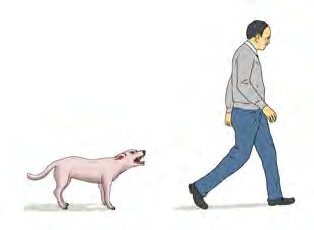
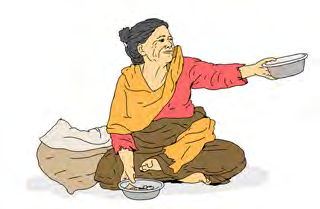
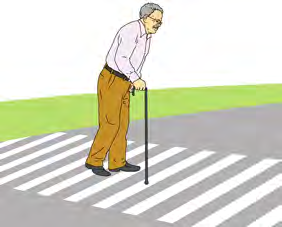

You are not really standing beside these people. You are imagining it. English has a special word for imagined actions: would. So you say, I would drive the dog away. I would give the old woman some food. I would hold the old man's hand and take him across the road. I would congratulate the girl and clap for her. The word would turns a real sentence into an imagined one, and this whole unit is built on it.
Use would when you talk about an action you are only imagining, not one that is really happening.
A Song About Wishes
This song is a chain of wishes. The singer has no wings, is not a dolphin, and is not a monkey. Every line imagines a life the singer does not have, and every wish uses the same machinery: would for the dream, and a past form after if for the condition.
I would fly happily and go so highIf I had the time and wings to flyHigh from the sky, I would see downAnd would go to the world round and round.I would surely dive deep down the seaIf I were a dolphin dancing happilyI would travel for food miles and milesIf I were the hungry little crocodiles.I would be free roaming in a jungleIf I were a monkey jumping on a treeI had the only wish what could I beTo remain happy, active and free.
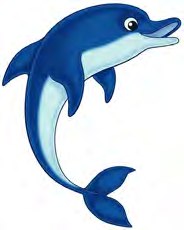
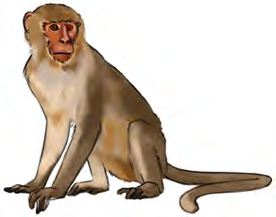
Look at the shape of the lines. I would fly if I had wings. I would dive if I were a dolphin. The pattern is always the same: I would do this if I were that. Now try it on yourself. How would you live your life if you were a bird? You might say, I would build my nest on the tallest tree, I would sing every morning, and I would fly over my school and look down at my friends.
The Monkeys Go Fasting
One day, a group of monkeys decided to go on a fast. The old monkey chief was worried. If no food was stored, he thought, they would all be starved as soon as the fast ended. So he called the younger monkeys and suggested that they collect some food first, so that everyone could eat immediately after the fasting was over. The monkeys nodded their heads in agreement, and the youngsters went off in search of food. They came back carrying huge hands of delicious-looking bananas.
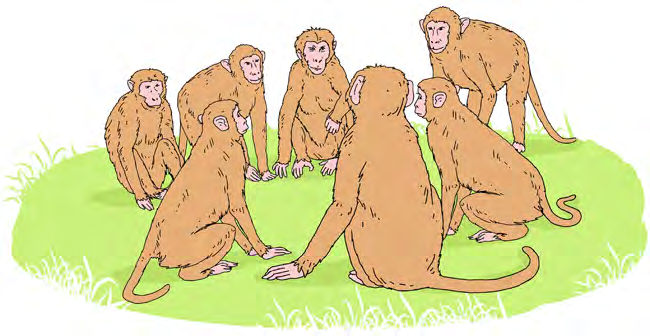
Looking at those bananas, the wife of the chief gave her advice. Keep your own share with you before we begin, she counselled, because there will be no time for distributing bananas after we break the fast, and imagine how hungry we will all be by then. The monkeys liked the idea and each collected a share. Then one of the youngsters asked, why don't we peel one banana and keep it ready to eat? Yes, let's do that, shouted a fat monkey, because just looking at the bananas was making him hungry. The chief agreed to the peeling, but on one condition: nobody would eat until the fasting was over.
So the monkeys peeled their bananas and kept them carefully ready for the evening. Then a little monkey asked his father, can I keep the banana in my mouth? I promise not to eat it till evening. His father went one step further. Why don't we all put a banana in our mouths? That way we can chew it immediately when we break the fast, and if we don't eat it, it won't harm our agreement.
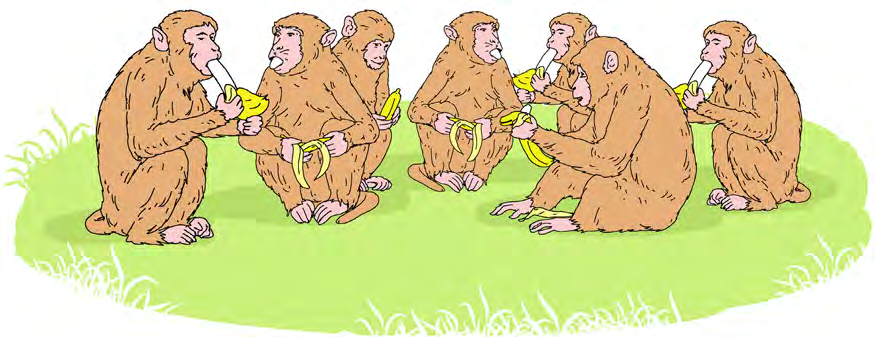
So the monkeys sat with bananas in their mouths, looking at each other uncomfortably as their fasting began. Within no time at all, the bananas disappeared down their gullets, and that was the end of their fast. Notice how the plan died: not in one big decision, but in small steps that each sounded harmless. Collect the food. Divide it. Peel it. Hold it in the mouth. Each step brought the banana a little closer, until no promise could survive.
Fasting: staying without food for a longer time.
Nodded: showed agreement by lowering the head.
Delicious: very tasty.
Hungry: having a strong desire to eat food.
Promise: to make a commitment to do something.
| Word | Meaning |
| starved | left weak because of having no food |
| counselled | gave advice |
| distributing | giving out shares to everyone |
| chew | crush food with the teeth |
| gullet | the food pipe in the throat |
| immediately | at once, without waiting |
Giving Suggestions
When a friend has a problem, English gives you three polite shapes for your advice. All three carry the same help; they simply wear different clothes.
You should + verb: states the advice directly. Example: You should tell your class teacher.
Why don't you + verb...?: offers the advice as a friendly question. Example: Why don't you inform your parents?
If I were you, I would + verb: puts you in your friend's place before advising. Example: If I were you, I would search myself first.
Watch the structures at work. Ansila has lost her English book, and Deepak talks her through it.
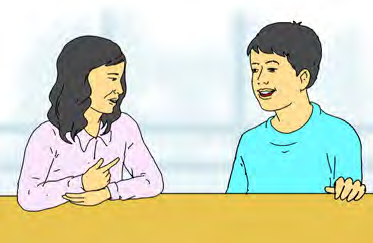
The same advice can wear all three shapes. If I were you, I would go to a dentist means the same as You should go to a dentist, and the same as Why don't you go to a dentist? Practise switching between them until each one comes naturally.
- Your friend has lost a notebook: You should look through your bag once more before anything else.
- Your friend is feeling thirsty: Why don't you drink some water?
- Your friend has a stomach ache: If I were you, I would tell the teacher and take a rest.
- Your friend is not so good at English: You should read a little English every day.
- Your friend has made some mistakes in a story: Why don't you check it once more before you hand it in?
Listening for the Key Words
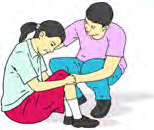
Suggestions are not only read and spoken. They are heard. Imagine a conversation between two friends, Ivan and Suvam. Ivan has lost something and feels terrible about it, and Suvam gives him advice using exactly the shapes you have just learnt. To catch a conversation like this with your ears, work in a fixed order.
- Read all the questions first, before the recording starts.
- Guess what kind of word each blank needs: a name, a thing, a feeling.
- During the first listening, catch the names and the key words. Do not try to write everything.
- Use the second listening only to check and complete your answers.
In that conversation, Ivan and Suvam are friends, not brothers. Ivan is afraid of telling the other friends what he has lost, and Suvam suggests that he stand in front of the class and say it loudly. Even inside a listening task, it is the suggestion structures doing the real work: tell your teacher, why don't you, if I were you.
The Second Conditional
The second conditional imagines a present situation that is not real or not likely, together with its result. Its shape is: If + subject + past simple verb, subject + would or could + base verb. Example: If I were a bird, I would fly in the sky.
The past tense here does not mean past time. It is a signal that says: this is imagination, not fact. Study these sentences and what each one really tells us about the present.
- If the weather improved, we could go for a walk. This means it is not likely that the weather will improve.
- If people complained, things would change. This means people do not complain at the moment.
- If there were more buses, we would leave the car at home. This means it is unlikely that there will be more buses.
- I would buy a house if I had enough money. This means it is unlikely that I will have enough money.
The two halves can trade places. When the if half comes first, a comma separates it from the result: If he called me, I would go to meet him. When the result comes first, no comma is needed: I would go to meet him if he called me. Either way, the if half takes the past simple and the result half takes would or could. If you ran fast, you could win the race. If we studied carefully, we could secure good marks. If she asked me, I would tell her the answer.
In imagined sentences, be becomes were for every subject. Write If I were a bird and If she were here. People say if I was in everyday speech, but in your writing use were.
Would never enters the if half. Write If she asked me, I would tell her the answer. Never write If she would ask me. The if half carries the past simple, and would waits in the result half.
Writing: From Real to Imagined
A real sentence about the present can be turned inside out into an imagined one. Take this real sentence: I don't live with my parents, so I don't see them every day. Here is how it becomes a wish.
- Step 1: Find the two parts of the real sentence: the situation and its result.
- Step 2: Flip the situation from negative to positive, put its verb in the past simple, and start it with if: If I lived with my parents.
- Step 3: Flip the result too and give it would: I would see them every day.
- Step 4: Join the halves with a comma: If I lived with my parents, I would see them every day.
The flip works on any real sentence built with so. It isn't sunny outside, so children will not go for a walk becomes If it were sunny outside, children would go for a walk. He doesn't have free time, so he will not visit me becomes If he had free time, he would visit me. Notice that both halves change sign: what was negative turns positive, because the imagined world is the opposite of the real one.
Writing also means building a story from a bare outline, and the glue of a story is its joining words: because, so, and, but. Watch them hold this old tale together. The mice were very unhappy because the cat had killed many of them. So they held a meeting to discuss how to get rid of the cat. They gave various suggestions, but no plan was practicable. Then a young mouse suggested that a bell should be tied round the cat's neck, and all welcomed the proposal with joy. But an old mouse stood up and asked who was going to tie the bell round the cat's neck. Nobody answered. It is easy to suggest, and hard to do.
History of Computers
The first computers were very big. They were the size of a room, so big that people did not have them at home. Every computer could also only do simple math, like a calculator. In the 1930s, Alan Turing had the idea for a computer you could programme to do different things, and that idea changed everything that came after it.
In 1958, Jack Kilby invented the microchip. Microchips are tiny but can store lots of information, and they helped make computers smaller. In the 1970s, computers were smaller and cheaper, so people started to use them at home. In the 1980s, computer games were very popular, and lots of people bought computers just to play games.

Microchip: a tiny part of a computer that can store lots of information.
In 1989, Tim Berners Lee invented the World Wide Web (WWW), which is a way to organise information on the internet. Now, people all over the world can look for and share information on websites.

World Wide Web (WWW): a way to organise information on the internet so that people everywhere can find and share it on websites.
Today, people use smartphones to play games, send email and go on the internet. In the past, a simple computer was the size of a room. Now, it can go in your pocket.
What would happen if there were no mobile phones? Notice that this question is itself a second conditional. It is hard to imagine the world without smartphones. A large number of people have reported that smartphones have made their lives better, and nearly half of smartphone users say it is very difficult for them to imagine life without one. We trust our phones to wake us up every morning, prepare us for where we want to go, and reply to emails, along with hundreds of other things. As we have become dependent on mobile apps, our lives keep getting easier day by day.
| Time | What happened |
| The 1930s | Alan Turing had the idea for a computer that could be programmed to do different things. |
| 1958 | Jack Kilby invented the microchip. |
| The 1970s | Computers became smaller and cheaper, so people started to use them at home. |
| The 1980s | Computer games became very popular. |
| 1989 | Tim Berners Lee invented the World Wide Web (WWW). |
| Today | Smartphones put a whole computer in your pocket. |
Irregular Past Forms
The sentences of this unit lean on past forms, and many of the most common English verbs refuse to take -ed. They change their shape instead. Each such verb has three forms to learn: the infinitive, the simple past, and the past participle. The song says I would fly; the past of fly is flew and its participle is flown. Learn this table a few rows at a time, saying each row aloud.
| Infinitive | Simple past | Past participle |
| be | was | been |
| beat | beat | beaten |
| begin | began | begun |
| break | broke | broken |
| blow | blew | blown |
| bring | brought | brought |
| build | built | built |
| buy | bought | bought |
| choose | chose | chosen |
| draw | drew | drawn |
| drink | drank | drunk |
| drive | drove | driven |
| fall | fell | fallen |
| feel | felt | felt |
| fight | fought | fought |
| find | found | found |
| fly | flew | flown |
| forget | forgot | forgotten |
| get | got | got |
| give | gave | given |
| grow | grew | grown |
Notice a pattern that makes memorising easier: for many verbs the simple past and the past participle are the same word. Bring, brought, brought. Feel, felt, felt. Find, found, found. Others change all three times, like begin, began, begun and drink, drank, drunk. Group them this way and the table shrinks.
Project: A List of Suggestions
Put everything in this unit to work. Make a list of suggestions for your younger brother or sister to prepare better for an examination, using all three suggestion shapes, and present the list to your class. Here is the kind of list to aim for.
- You should make a study timetable and follow it every day.
- You should sleep early the night before the examination.
- Why don't you revise with a friend and test each other?
- Why don't you practise questions from old papers?
- If I were you, I would revise a little every day instead of everything at once.
- If I were you, I would keep my pencils, ruler and admit card ready the night before.
The full lesson is waiting for you
Create a free account to unlock activities, practice tests, presentations and videos - and to track your progress and confidence score for every subject.
Would is the word for imagined actions: I would help her, I would fly.
11 more points to remember - sign in to see the rest.
Question 1 of 14