Making Good Wishes
People everywhere celebrate special days. On a birthday, at Dashain, at Eid, at Christmas, we meet our friends and family and say kind words to them. These kind words are called wishes or greetings. Saying "Happy birthday!" or "Happy Dashain!" is a small thing, but it makes the other person feel loved. In this unit you will learn the names of the big festivals of Nepal, what people do during them, and the exact English words to use when you greet someone.
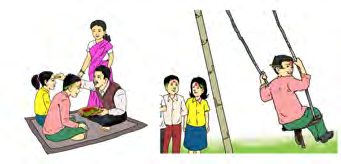
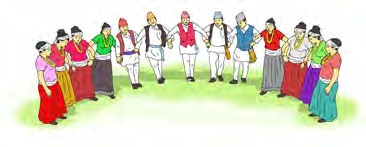
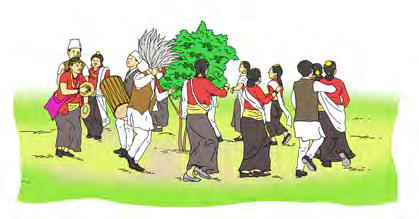
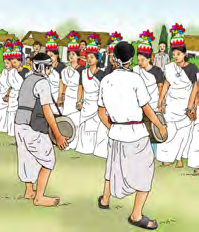
Look at how different the celebrations are. Some people receive tika from their elders, some dance in a circle holding hands, some play drums in a procession. Different communities celebrate in different ways, but everyone shares food, music and good wishes. A birthday is a celebration too, and people often sing for the birthday person. Here is a birthday song. Read it aloud and feel its rhythm.
Smile on face and laugh on lipsWish you the joy and cheer it givesMay your birthday bring all theseHave a good life and tensions cease.You really did hard work, all day and nightGood luck for exams, you surely make brightIt might be hard and tough might be thisBut surely you can do, how tough it is.
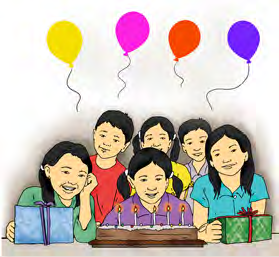
A wish usually begins with "Happy", "May" or "I wish". To a friend on her birthday you can say, "Happy birthday, Sita! May all your dreams come true." Before a festival you can wish your teacher, "Happy Dashain, madam! May the festival bring you joy and good health." Practise making wishes like these, because you will use them all through this unit.
Festivals of Nepal
Nepal is home to many communities, and each community has its own festivals. Buddhists celebrate Buddha Jayanti, Muslims celebrate Eid, Hindus celebrate Tihar and Chhath, and Christians celebrate Christmas. Each festival has its own time of year, its own way of celebrating, and its own meaning. Read about each one carefully, because you should be able to say who celebrates it, when it is celebrated, and what people do.
Buddha Jayanti
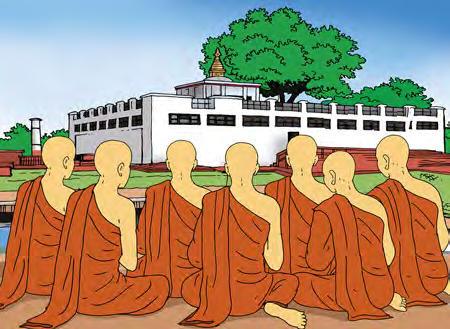
Buddha Jayanti is a festival celebrated by Buddhists on the day of Baisakh Purnima, the full moon day of the month of Baisakh. It is a very special day because Siddhartha Gautam was born, enlightened, and died on this same day. The festival is also called Buddha Purnima. Buddha was born in 623 BC in Lumbini, Nepal. The festival is celebrated all over Nepal and abroad too to commemorate his birthday.
On this day people go to monasteries and stupas to pray to Lord Buddha for peace and prosperity. Special chanting and prayers are performed there. The monuments are decorated with beautiful flowers and colours. People visit Lumbini and other holy places like Swoyambhu and Bouddha, where they meditate and chant prayers to Lord Buddha.
Eid
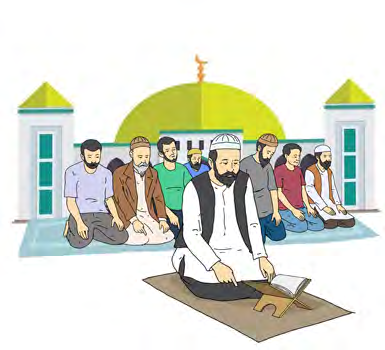
Eid is the biggest festival of the Muslim community. It is celebrated world-wide on the last day of Ramadan. Ramadan is a month-long fast. Eid generally falls in the month of Saun, but the exact date is confirmed every year according to the Islamic calendar. Muslim people exchange greetings, go to mosques, recite Namaj, and pray to Allah for the unity and prosperity of all human kind. They greet and embrace each other with the greeting "Eid Mubarak", which means best wishes on the occasion of Eid.
Tihar
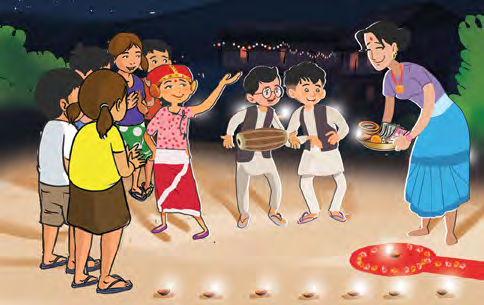
Tihar is one of the biggest festivals of Hindus celebrated in Nepal. It is also known as Dipawali, the festival of lights. It falls in the month of Kattik and is celebrated for five days, which is called Yama Panchak. The first day is Kag Tihar, the second is Kukur Tihar, the third day is Laxmi Puja, the fourth day is Goru Tihar, and the last day is Bhai Tika. Laxmi Puja and Bhai Tika are the most popular days.
On Laxmi Puja people worship goddess Laxmi by lighting candles and offering Prasad. The cow is also worshipped on that day. On the day of Bhai Tika, sisters offer Tika to their brothers and wish for their longevity and prosperity, which means a long and successful life. Brothers and sisters make good wishes with each other, and people enjoy the festival a lot.
Chhath
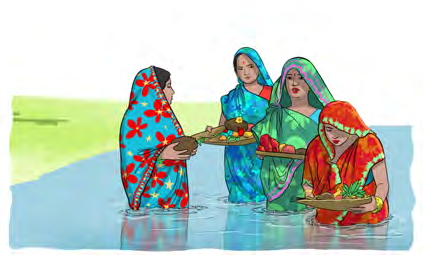
Chhath is celebrated on the day of Kattik Shukla Shasthi, immediately after Tihar. People worship goddess Chhathi Maiya and pray to the sun, both the rising and the setting sun. The festival originated in the Terai region of Nepal, but nowadays it is celebrated in other parts of the country too. People go to the banks of rivers, ponds, or lakes and offer Prasad in the name of Chhathi Maiya, the goddess.
Christmas
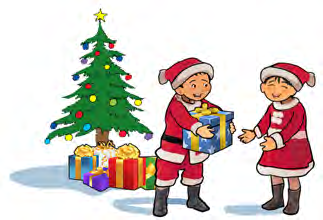
Christmas is celebrated on the 25th of December to commemorate the birth of Jesus Christ. It is celebrated by the Christians in Nepal too. People go to Church and pray to Jesus Christ and exchange greetings and good wishes with each other. They decorate their homes, surroundings, and market places with Christmas trees and lights. They exchange gifts, have delicious food and enjoy the festival.
| Festival | Who celebrates it? | When is it celebrated? | What do people do? |
| Buddha Jayanti | Buddhists | Baisakh Purnima | Pray at monasteries and stupas, chant, decorate monuments |
| Eid | Muslims | Last day of Ramadan, usually in Saun | Go to mosques, recite Namaj, exchange greetings |
| Tihar | Hindus | Month of Kattik, for five days | Light candles, worship Laxmi, sisters give Tika to brothers |
| Chhath | Hindus, first in the Terai | Kattik Shukla Shasthi, just after Tihar | Pray to the rising and setting sun, offer Prasad by rivers |
| Christmas | Christians | 25th December | Go to Church, decorate homes and trees, exchange gifts |
Words from the Reading
The reading uses some words you should learn well. Each of them can be asked in the exam by its meaning, so learn the word and the meaning together.
- Purnima: a full moon day.
- Monument: a structure erected to commemorate persons or events.
- Recite: to repeat aloud from memory.
- Chhathi Maiya: the name of the goddess prayed to during Chhath.
- Celebrated: marked by some ceremony or observation.
- Commemorate: to remember and honour a person or an event.
- Enlightened: given true knowledge and understanding.
- Longevity: a long life.
- Prosperity: success, wealth and good fortune.
- Meditate: to sit quietly and focus the mind.
Greeting People at Festivals
Every festival has its own greeting, and knowing the right one shows respect for the person's culture. Read these two short conversations aloud with a partner. Notice that the greeting comes first, then the reply, then a thank you and a wish back.
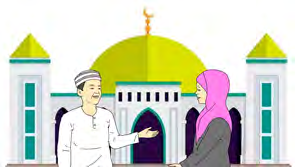
You can build a greeting for almost any festival with the word "Happy": Happy Dashain, Happy Udhauli, Happy Chhath, Happy Holi, Happy Teej, Happy Maaghi, Happy Buddha Jayanti, Merry Christmas. The reply is always polite: thank the person, then wish them back with "to you too". Practise a full exchange for each festival with a friend.
The Gaura Festival
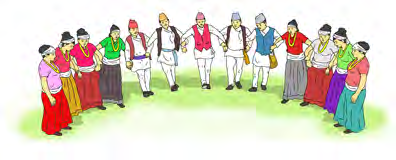
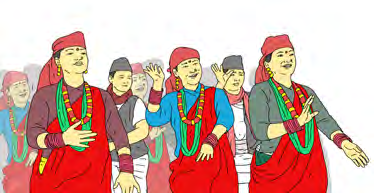
Gaura is a very popular festival in Western Nepal. It falls in the month of Bhadau. During the festival, women fast and worship the goddess Gauri, praying for the well-being of their families. On the occasion of Gaura, people perform the Deuda dance. In Deuda, men and women stand in a circle or a curved line, hold hands, and step together while singing. The songs themselves carry the rhythm, so Deuda is not played with musical instruments.
Gaura belongs to Western Nepal, falls in Bhadau, and is a women's worship of goddess Gauri. Deuda is its famous hand-in-hand dance, sung without instruments.
Imperative Sentences
An imperative sentence gives an order, an instruction, a request or advice. It starts with the verb itself, without saying "you" and without "to" before the verb. Example: "Close the window if you're cold."

Think of the rules a teacher writes for the class. Every one of them is an imperative sentence.
- Try your hardest in class.
- Don't eat food.
- Close the window if you're cold.
- Put your hand up to ask a question.
- Don't shout out!
- Don't hit other children.
- Don't chew gum.
Notice the two kinds. A positive imperative tells you to do something and begins with the plain verb: "Try", "Close", "Put". A negative imperative tells you not to do something and begins with "Don't": "Don't shout out!", "Don't chew gum." You can add "please" at the beginning or the end to make an imperative more polite: "Please put the plates on the table." "Don't make so much noise please."
Don't say "you" and use the verb without "to". Write "Wait for me", not "You wait for me" and not "To wait for me". The imperative starts straight with the verb.
When jumbled words make an imperative sentence, put the verb first, then the object, and put "please" at the start or the end. For example, the words "salt / Pass / me / please / the" become "Pass me the salt please."
Writing About a Festival
Good writing needs correct capital letters and correct end marks. A sentence always begins with a capital letter. Names of people, gods, places and festivals also take capital letters: Mahashivaratri, Shiva, Pashupatinath, Kathmandu, Phagun. A statement ends with a full stop, not a question mark. Look at this corrected paragraph: "Mahashivaratri is a festival of Hindu people. They go to Pashupatinath temple of Kathmandu to worship Shiva. Other temples of Shiva are also crowded with devotees. This festival falls in the month of Phagun."
To write a paragraph about your favourite festival, answer four questions in order and join the answers into smooth sentences.
- Who is it celebrated by?
- When is it celebrated?
- What do people do on the festival?
- Why do you like the festival?
Here is a model. "My favourite festival is Tihar. It is celebrated by Hindus in the month of Kattik. People light candles, worship goddess Laxmi, and sisters put Tika on their brothers' foreheads. I like Tihar most because our whole house glows with lights and we sing Deusi and Bhailo with our friends."
The Question Mark and the Comma
A question mark (?) is used at the end of a sentence that asks a question. Example: "Where is the bathroom?"
The question mark has three main uses. Use it at the end of a sentence that asks a question: "Are you home?" Use it at the end of a tag question, the short question tagged onto a statement: "You speak English, don't you?" "Lisa is not here, is she?" Use it after a question to which no answer is really expected: "Who cares?" "Are you kidding me?"
A comma (,) is a mark that separates parts of a sentence so the reader does not run them together. Example: "My best friends are Nita, Nisha, Nimesh and Lisa."
- Use a comma to separate three or more words or phrases in a list: "The colours in my bedroom are blue, green and yellow."
- Use a comma when writing a full date in a sentence: "He was born on March 17th, 1981." Do not use a comma if the day or the year is left out: "School will begin on August 25th."
- Use a comma to separate the city from the state or province: "She was born in Dhading, Bagmati."
- Use a comma around degrees or titles with names: "Ram Karki, M.D." "Karima Begam, Ph.D."
- Use a comma after introductory words such as yes, no, well and finally: "Yes, I would love to go to the park today." "Now, it's time to start the movie."
The comma in a date comes only between the day and the year. "March 17th, 1981" is correct. If you write only the month and the day, no comma is needed at all.
Project: A Festival of Your Locality
Now use everything from this unit on a real festival near you. Work in a group of five and prepare a chart to present to the class.
- Choose one festival that is celebrated in your locality.
- Collect information about it: who celebrates it, when it falls, and what people do.
- Draw pictures of the festival and paste them on chart paper.
- Write short sentences under each picture, using capital letters and full stops correctly.
- Present the chart to the class, and end with the festival's greeting.
The full lesson is waiting for you
Create a free account to unlock activities, practice tests, presentations and videos - and to track your progress and confidence score for every subject.
Buddha Jayanti falls on Baisakh Purnima. Buddha was born, enlightened and died on this same day, so it is also called Buddha Purnima.
11 more points to remember - sign in to see the rest.
Question 1 of 14