A World Full of Surprises
Imagine walking along a quiet road and seeing a goat standing high up in the branches of a tree. You would stop, stare, and maybe say Wow! or How is that possible? That feeling is surprise. We feel it when something happens that we never expected. Surprise can be pleasant, like hearing that tomorrow is a holiday, or unpleasant, like hearing that our team has lost a match. This unit is about surprise: reading about it, talking about it, and choosing the right English words when it happens.
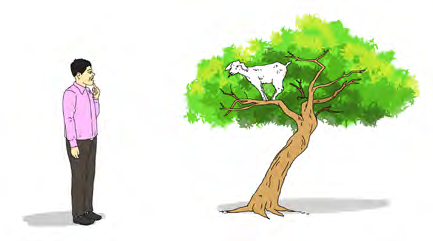
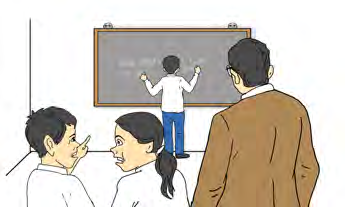
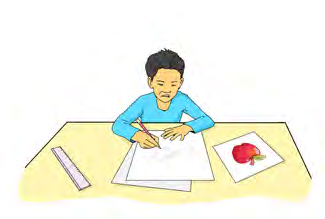
Think of a surprising event from your own life. Maybe you found money on the road, met a friend far from home, or saw an animal in a strange place. Practise telling a friend about it in English. Say what happened, where it happened, and how you felt. This is exactly the skill the whole unit builds.
Surprised by Joy
Even great poets write about surprise. William Wordsworth, a famous English poet, wrote these lines after a moment of sudden happiness. He turned to share his joy with someone he loved, and then remembered, with a shock, that the person had died. His surprise turns into deep sadness in only a few lines.
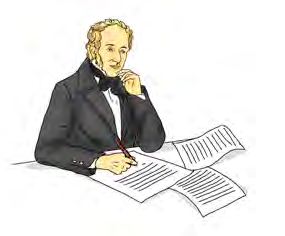
Surprised by joy, impatient as the WindI turned to share the transport. Oh! With whomBut Thee, long buried in the silent Tomb,That spot which no vicissitude can find?Love, faithful love, recalled thee to my mind,But how could I forget thee? Through what power,Even for the least division of an hour,Have I been so beguiled as to be blind
In the poem, transport means great joy, thee means you, and vicissitude means change. The poet is saying that joy surprised him, love brought the memory of his loved one back, and he wonders how he could have forgotten that person even for a moment.
A Palm Reader
A few years ago, a traveller was on holiday in the Himalayas. One evening he stopped for the night in a small village. It was a poor place with no proper hotel, but the owner of a restaurant kindly offered him a bed for the night. The owner pointed to a table just outside the restaurant and asked him to wait there while the room was prepared. It was a beautiful evening. The sun was setting behind the dark mountains, the stars were just beginning to come out, and the villagers were lighting fires for their evening meals. There was a pleasant smell of wood smoke in the air.
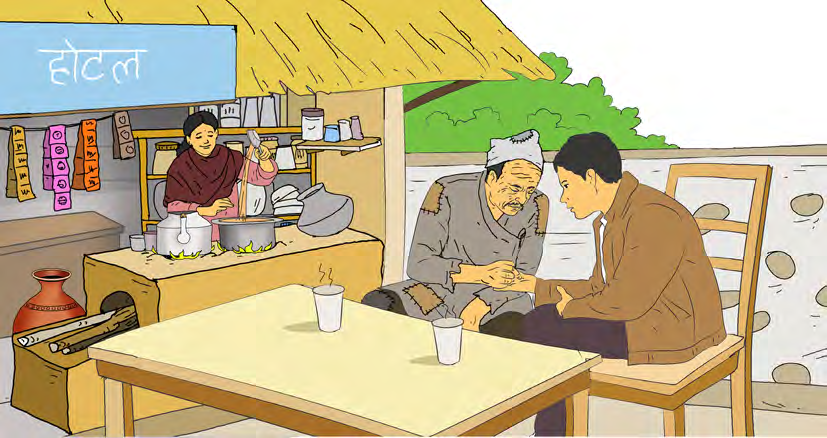
Then the traveller noticed that he was no longer alone. An old man with a long white beard was sitting at the table beside him. His clothes were dirty and almost in rags. The old man offered to tell the traveller's fortune. The traveller laughed and said he did not believe in that sort of thing, but the old man took hold of his hand and held on to it, gently but very firmly. The traveller set a test. He said the old man should first tell him about his past, and only then would he let him speak about the future. The old man looked hard at his hand for a long time. Then, in a low soft voice, he began to talk about the traveller's childhood, his family, the town he used to live in, and his life in different parts of the world. Every word he said was true! The shocked traveller asked how he could know all these things. The old man replied that he knew the past and the present, and also the future, and asked if the traveller was ready to hear his future too. The traveller hesitated. Did he really want to know?
Just at that moment the owner of the restaurant came out to say the room was ready. He said he thought he had heard voices. The traveller looked around, and the old man was not there. When the traveller described him, the owner laughed and said that the old man was the village lunatic who thinks he can tell people's fortune. Here is the surprise of the story: a man everyone calls mad had told a stranger's whole past correctly. The story never tells us how, and that is why it stays in our minds.
| Word | Meaning |
| proper | good, of the kind you would expect |
| offered | said someone could have or use something |
| noticed | saw |
| rags | old and torn clothes |
| fortune | chance or luck, what will happen in a person's life |
| held | caught and kept in the hand |
| firmly | strongly, without letting go |
| hesitated | waited because of not being sure |
| lunatic | a mentally ill person |
Saying You Are Surprised
English has different expressions for different kinds of surprise. When the news is good, our words show joy. When the news is bad, our words show shock and sympathy. Read these two short conversations aloud with a friend and act them out with your face and voice.
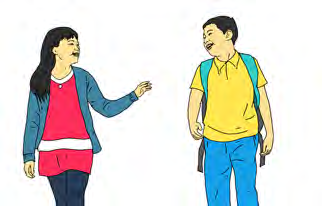
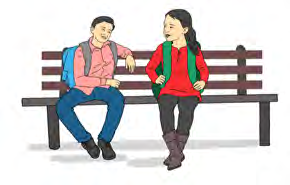
| When the news is good | When the news is bad |
| Hurray! | Oh, no! |
| Wow! Really? | It's bad luck! |
| That's wonderful news! | I am shocked. |
| Thank you for such good news! | How sad! |
Hurray and Wow are for good news only. If a friend tells you that a relative is in hospital and you answer Hurray, you will hurt them badly. For sad news use Oh, no, How sad, or I am shocked.
A Trip to Chitwan
Good listeners catch names, places and times. Practise with a conversation between two friends, Suman and Shanta. Suman tells Shanta about his visit to Chitwan, in the southern plains of Nepal, where his uncle's home is. He describes the animals he saw and the fun he had, and Shanta is so excited that she decides to talk to her parents and plan a winter vacation trip of her own.

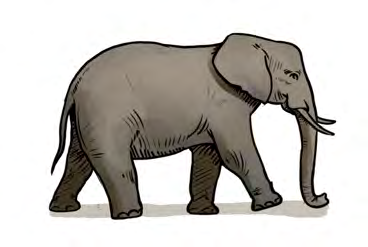
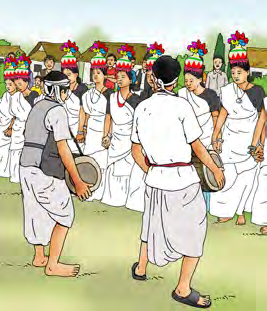
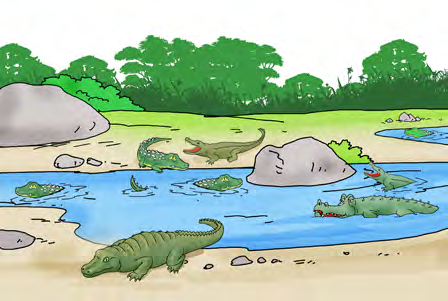
Chitwan National Park is the place in Nepal famous for the one-horned rhinoceros. Visitors also see elephants, deer and crocodiles in its rivers and grasslands. The Tharu community lives in Chitwan, and their colourful traditional dance is a treat for every visitor. When you listen to any recording about a place like this, listen once for the main idea, then listen again for details such as who is speaking, whose home is where, and when the visit happened.
Three Ways of Talking About the Past
When we tell a story or share news, we talk about the past. English has three past tenses that do three different jobs. Study these sentences: I went to school yesterday. She was watching TV at this time yesterday. The patient had died before the doctor came. Each coloured verb tells the listener a different thing about time.
Past simple: an action that started and finished in the past. It uses the second form of the verb. Example: She gave me a book. Time words like yesterday, ago and last night go with it.
Past continuous: an action that was in progress at a certain time in the past. It uses was or were with the ing form of the verb. Example: She was dancing when I saw her.
Past perfect: the earlier of two past actions. It uses had with the past participle. Example: The thief had run away before the police came.
| Tense | Form | Example |
| Past simple | second form of the verb | I went to school yesterday. |
| Past continuous | was or were + verb-ing | She was watching TV at this time yesterday. |
| Past perfect | had + past participle | The patient had died before the doctor came. |
Try this sentence: She ......... (was washing / washed / had washed) her clothes when I called her. Follow these steps to choose the right form.
- Step 1: Find the time clue. Here the clue is when I called her, a short action that broke into something.
- Step 2: Ask what was happening at that moment. The washing was already going on when the call came.
- Step 3: An action in progress in the past takes was or were with the ing form, so the answer is was washing.
- Step 4: Read the full sentence aloud to check that it sounds natural: She was washing her clothes when I called her.
Use the past perfect only when there are two past actions and one clearly happened first. The bus had already left the station works because the bus left before someone reached it. If only one action happened, the past simple is enough: We went to the cinema last night.
At a Chemist
A chemist is a shop that prepares and sells medicine. In this conversation, a customer brings a doctor's prescription for his wife, who has a stomach-ache. Notice how politely both people speak, and notice the useful words about medicine.
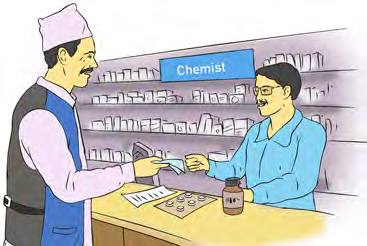
Prescription: a doctor's written order that tells the chemist which medicines to prepare for a patient.
| Word or phrase | Meaning |
| make up | prepare |
| out of stock | not available |
| formula | chemicals composing a medicine |
| call | telephone |
| emergency | serious situation needing immediate attention |
| alternative | available as another possibility or choice |
A chemist must never sell medicine without a doctor's prescription, not even in an emergency. If a drug is out of stock, ask the doctor about an alternative. Never take a different medicine on your own.
Writing a Dialogue
A dialogue has a simple shape on the page and a simple shape in time. On the page, each speaker's name comes first, then a colon, then the exact words spoken. In time, a good dialogue greets, states its purpose, takes turns, and closes politely. Study this model, a telephone call to a dental clinic. The caller has a broken filling and wants an appointment.
Dialogue: a conversation between two or more people, written with each speaker's name on the left, a colon after it, and then the words that speaker says.
Notice what the caller did. She greeted first, asked for what she wanted, explained her problem clearly, bargained politely for an earlier time, and thanked the receptionist. Now write your own dialogue between you and a friend about a plan to visit Lumbini, the birthplace of Gautam Buddha. Decide when you will go, how you will travel, and what you want to see there, and let each speaker take short natural turns.
Project: A Discovery of Modern Science
Choose one discovery of modern science, such as electricity, penicillin, the telephone or the computer. Find out who discovered or invented it, when it happened, and how it changed people's lives. Prepare a short report of a few paragraphs and present it to your class. Speak slowly, look at your audience, and end with one sentence saying why the discovery matters to you.
The Twenty Vowel Sounds
English writing has only five vowel letters, but English speech has twenty vowel sounds. Each sound has its own symbol, and learning them helps you say new words correctly.
The length mark: when the symbol ':' follows a vowel symbol, that vowel is pronounced longer. So /i:/ in see is a long sound, while /ɪ/ in pit is a short one.
| Sound | Example words |
| /e/ | went, intend, send, letter |
| /æ/ | cat, hand, nap, flat, have |
| /ʌ/ | fun, love, money, come |
| /ʊ/ | put, look, cook, book |
| /ɒ/ | top, watch, god, spot |
| /ə/ | alive, again, mother |
| /ɑ:/ | calm, palm, start |
| /ɪ/ | pit, bin, fill, will |
| /ɔ:/ | saw, fall, wall, dawn |
| /u:/ | you, who, shoe, cool |
| /ɜ:/ | curve, herd, bird, serve |
| /i:/ | he, see, keep, she |
| /aɪ/ | cry, like, bright, lime |
| /eɪ/ | bake, rain, eight, break |
| /əʊ/ | go, loan, slow, though |
| /aʊ/ | bound, brown, now, house |
| /eə/ | pair, stare, care, hair |
| /ɪə/ | career, here, near, year |
| /ɔɪ/ | boy, toy, coin, foil |
| /ʊə/ | tourist, usual, jury, lure |
Trust your ears, not the letters. Spelling can trick you: break sounds like rain, and though sounds like go. Say each example word aloud and listen for the vowel sound.
The full lesson is waiting for you
Create a free account to unlock activities, practice tests, presentations and videos - and to track your progress and confidence score for every subject.
Surprise can be pleasant or unpleasant, and English has different expressions for each.
11 more points to remember - sign in to see the rest.
Question 1 of 15