Saying Sorry
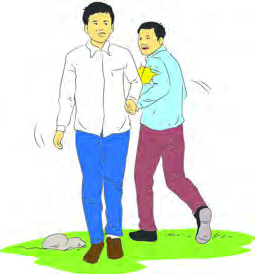
Everyone makes mistakes. You may step on someone's foot in a crowd, speak loudly where sick people are resting, or break a rule without meaning to. What matters is what you do next. A person who says sorry quickly and honestly keeps their friends and earns respect. A person who stays silent turns a small mistake into a big one. This unit is about the many ways English speakers say sorry, and about the kindness of forgiving someone who apologises.
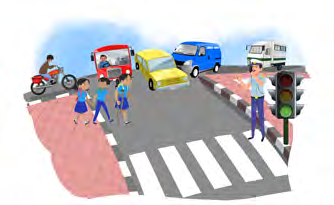
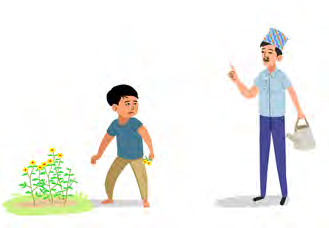
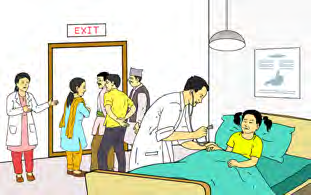
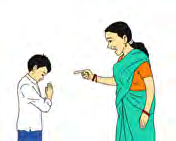
An apology is what we say to show that we are sorry for a mistake we made or for trouble we caused to someone. Common apology words are sorry, I am sorry, please forgive me and I apologise.
A Song of Apology
This short song asks forgiveness from friends, parents, teachers and even the earth itself. Sing it slowly and notice who the singer says sorry to in each line.
Sorry my friend if I hurt youMy parents and the teachers tooI am sorry for all my ignoranceKnown, unknown I did hence.Forgive me earth if I exploit a lotIf not satisfied still what I have gotI promise not to hurt you any moreAnd stand here to thank you therefore.
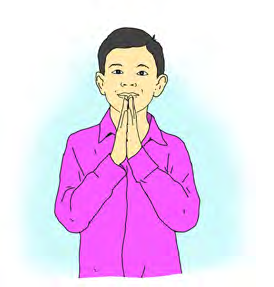
The song teaches two things at once. First, an apology can be for things we did knowingly and for things we did without knowing. Second, a true apology carries a promise: I promise not to hurt you any more.
Forgiveness of the King
Once upon a time there was a king. One day he set out on a tour with his ministers, taking his royal security and his courtiers along with him.
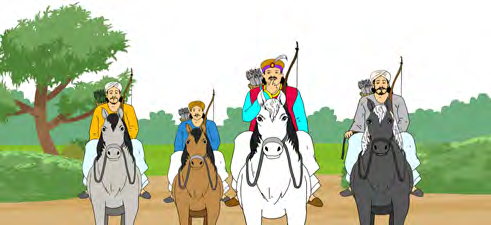
On the way, the king took a rest under the shade of a mango tree in a mango garden. Suddenly a stone hit him on his forehead, and it started bleeding immediately. The pain was intolerable, and the king had no idea who had thrown the stone. His security left at once to find the person. After a long search they found only an old lady there. When they asked her if she had thrown any stone recently, she replied, "Yes, I threw a stone at the mango tree." But when they asked, "Did you throw any stone at the king?" the woman did not answer. She only turned pale. She was arrested and presented before the king.
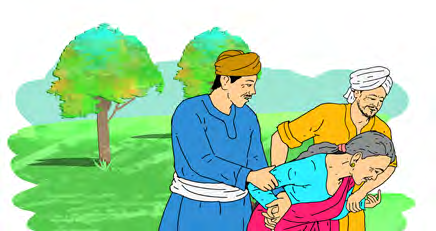
The old woman trembled with immense fear and prayed that they would not kill her. When she saw the blood flowing down the king's face she became even more upset and felt hopeless. "What will happen to me?" she thought. The king, very calmly, asked her, "Did you throw the stone at me?" She replied, "Your Majesty, I threw the stone at the mango tree." "Why?" the king asked. In fear she explained that her child had been starving for two days. She had been collecting food for him but could not find any. She hoped that if she threw a stone at the mango tree, a mango would fall and she could feed her son. The stone had hit the king by mistake. Then she bowed down before the king, begging an excuse for her mistake.
The king was kind hearted, so he understood the situation very well. He forgave her mistake and ordered his security personnel not to punish her. Instead, he ordered them to give her some money and food.
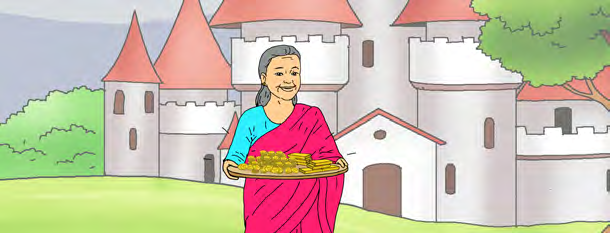
The woman told the truth even when she was terrified, and the king forgave her instead of punishing her. Honesty invites forgiveness, and a kind heart chooses to understand before it judges.
Words from the Story
These are the words from the story that you should be able to use in your own sentences.
- royal: belonging to a king or queen. The royal security guards the king.
- courtier: a person who attends the king at his court.
- shade: the cool, darker area under a tree where sunlight does not reach.
- intolerable: so bad that it cannot be borne. The pain was intolerable.
- threw: past tense of throw. She threw a stone at the mango tree.
- trembled: shook with fear or cold.
- immense: extremely great. She trembled with immense fear.
- personnel: the people who work for an organisation, such as the security personnel.
Saying Sorry in Conversation
Read these two short conversations aloud with a partner. In both of them, one person politely points out a mistake and the other apologises at once.
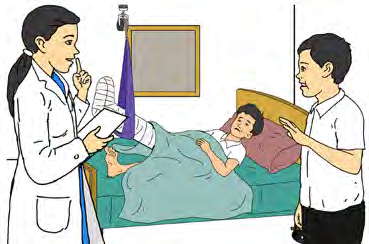
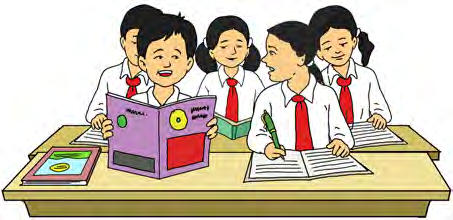
Excuse me and sorry are not the same. Say excuse me BEFORE you trouble someone, to get their attention politely: Excuse me, can I get past? Say sorry AFTER a mistake has happened: I am sorry, I broke your pencil.
English has different sorry phrases for different sizes of mistake. A tiny slip that hurts only yourself needs just a word, like Whoops. A mistake that troubles another person needs a fuller apology, and a serious one needs an offer to put things right. Match each situation below with its apology.
| Situation | A good apology |
| You kept someone who is phoning you on hold for a long time. | Sorry to keep you waiting. |
| You are phoning someone again to ask another question. | Sorry to bother you again, but there's one more thing I don't understand. |
| You have arrived late at a restaurant. | Sorry I'm late. Have you been waiting long? |
| You need someone to move so you can get off the bus. | Excuse me, can I just... |
| You have spilt someone's drink. | I'm terribly sorry. Let me buy you another one. |
| You spilled your drink on your own clothes. | Whoops. |
| A customer has just shown you a dirty spoon. | I'm sorry. Let me bring you another spoon. |
| A waiter brought you the wrong food. | I'm sorry, but this isn't what I ordered. |
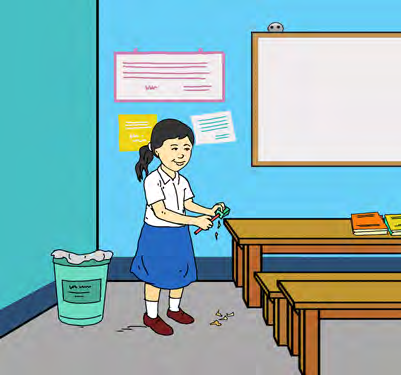
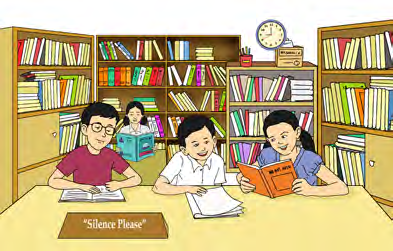
Now practise with a partner. Look at each of these five situations, decide who speaks first, and act out the conversation. One of you points out the problem politely, and the other apologises and offers to put it right.
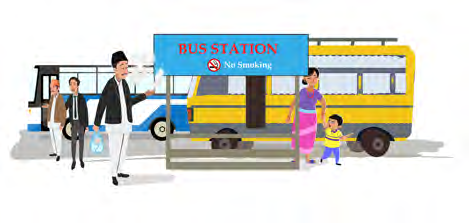
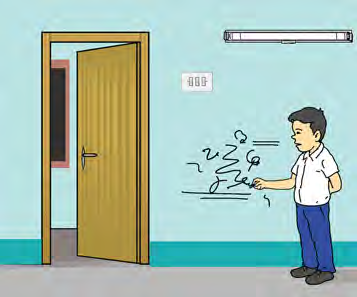
Listening for Sorry Words
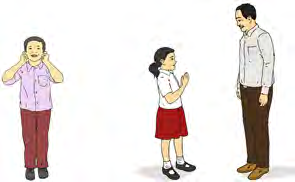
When you listen to English speakers apologising, your job is to catch the sorry words and the reason behind them. Speakers rarely say only sorry. They say what the mistake was, why it happened, and what they will do about it. Listen for phrases such as I'm sorry, I'm really sorry, I'm terribly sorry, please forgive me, I apologise, sorry to bother you and sorry to keep you waiting. Then listen for the reason that follows, because the reason answers most of the questions you will be asked.
Grammar: Making Sentences Negative
A negative sentence says that something is not true or does not happen. It carries the word not, often joined to a helping verb in a short form: do not becomes don't, does not becomes doesn't, did not becomes didn't, have not becomes haven't.
Study these pairs. Each positive sentence has a matching negative one, and every negative can be written two ways: a short form for speaking and a full form for careful writing.
| Positive | Negative, short form | Negative, full form |
| I have an extra pencil. | I don't have an extra pencil. | I do not have an extra pencil. |
| I have completed it. | I haven't completed it. | I have not completed it. |
| She saw me at the cinema. | She didn't see me at the cinema. | She did not see me at the cinema. |
| She spends a lot of money. | She doesn't spend a lot of money. | She does not spend a lot of money. |
To change a positive sentence into a negative one, follow this method.
- Find the helping verb in the sentence: is, am, are, was, were, have, has, can, will.
- If there is a helping verb, put not straight after it. They are playing cricket becomes They are not playing cricket.
- If there is no helping verb, borrow do, does or did. Use does for he, she and it in the present, do for the others, and did for the past.
- Put not after do, does or did, and change the main verb back to its base form. She spends becomes She does not spend.
After didn't and doesn't, the main verb must return to its base form, because did and does already carry the tense. Write She didn't see me, never She didn't saw me. Write My sister did not buy a car, never did not bought.
Reading a Reply Letter
A reply letter is a letter written to answer another person's letter. It thanks the sender, then answers their points one by one, and it stays polite even when it has to say no.
Here is a real example of a reply letter. Ms. Shaw is renting a flat and wrote to the owner, Mrs. Janet MacDonald, complaining about problems in it. On March 18th, from 19 Burns Avenue, Peebles, Scotland, Janet MacDonald wrote back. She begins, "Thank you for your letter," says she is sorry to hear about the problems with the flat, admits she cannot solve them all, but promises to try to be helpful. Then she answers the three complaints one by one.
| Problem in the flat | What Janet MacDonald replies |
| Furniture | Ms. Shaw liked it when she moved in and said so, but has now changed her mind. Janet is sorry, but she cannot help there. |
| Heating | She agrees the flat can be cold in winter. She lived there herself for twenty years, always used electric fires, and Ms. Shaw must do the same. She should also get someone to look at the windows. |
| Kitchen | It probably does need painting. Ms. Shaw should buy the paint and send Janet the bill, choose a suitable colour, nothing too modern, and paint the bathroom at the same time. |
Janet ends by apologising once more: she is sorry she cannot come to inspect the flat personally, because she lives rather a long way off. She signs off with Yours sincerely, Janet MacDonald. Notice how often a polite letter uses I'm sorry: to show sympathy, to refuse gently, and to explain why she cannot visit. Learn these words from the letter: a flat is a set of rooms to live in on one floor of a building; to solve a problem is to find the answer to it; suitable means right for the purpose; to inspect something is to look at it carefully; moved in means started living in a new home.
Writing an Apology Letter
Now you can write an apology of your own. Imagine you were rude to your friend at school and you want to say sorry and promise it will not happen again. A short apology letter has these parts, in this order.
- The date, and your address below it.
- A greeting: Dear and your friend's name, followed by a comma.
- The apology itself, naming the mistake clearly. Do not hide it.
- The honest reason, without turning the reason into a false excuse.
- A promise not to repeat the mistake, and an offer to put things right.
- A closing: Yours sincerely, and your name.
Here is a model you can learn the shape from.
June 14th. Bagbazar, Kathmandu.
Dear Sunita, I am really sorry for shouting at you during the games period yesterday. I was upset about losing the match, but that was no reason to be rude to you. You have always been kind to me, and I felt ashamed the whole evening. I promise I will never speak to you like that again. Please forgive me, and let us play together tomorrow as usual. Yours sincerely, Anisha.
An apology email follows the same idea with a slightly different shape. Instead of the date and address at the top, an email has a subject line, such as Apology for missing your class. To apologise to your teacher for not attending class, begin with Dear Sir or Dear Madam, say sorry for being absent, give the true reason, promise to catch up on the missed work, and end with your name and class. Type it in the computer lab and read it once before you press send.
Word Classes: Noun, Verb, Adjective, Adverb
Every word in an English sentence belongs to a word class, which tells you the job that word does. These four classes do most of the work in the sentences you read and write.
A noun is a word that names a person (teacher), thing (pencil), animal (cat), place (Kathmandu) or abstract idea (love). Anything in the universe has a name, and as there are many things in the universe, nouns comprise the largest group of words in English. Example: Mohan has a pen.
A verb is a word that expresses an action (to run), occurrence (to happen), or state of being (to appear). Verbs comprise the third largest group of words in English and appear in any sentence as a major part. Verbs also indicate time (past, present, future) and are used with many verb tenses. Example: She wrote a letter.
An adjective is a word that modifies, that is describes, a noun or pronoun. Adjectives comprise the second largest group of words in English. They inform about the qualities and features of people, things or concepts, such as big, strong, beautiful. Example: She is a good girl.
An adverb is a type of word that has many uses in English. It can modify, that is describe, a verb, an adjective, another adverb, or a whole sentence. Example: He was badly hurt in the accident.
| Word class | Its job | Example sentence |
| Noun | Names a person, thing, animal, place or idea | Mohan has a pen. |
| Verb | Expresses an action, occurrence or state | She wrote a letter. |
| Adjective | Describes a noun or pronoun | She is a good girl. |
| Adverb | Describes a verb, adjective, adverb or sentence | He was badly hurt in the accident. |
Try it on one sentence from the story: The old woman trembled with immense fear. Woman and fear are nouns, trembled is a verb, old and immense are adjectives. Now find the adverb in the sentence The king very calmly asked her. Calmly describes how he asked, so calmly is the adverb, and very is an adverb describing calmly.
The full lesson is waiting for you
Create a free account to unlock activities, practice tests, presentations and videos - and to track your progress and confidence score for every subject.
An apology names the mistake, gives the honest reason, and promises not to repeat it.
10 more points to remember - sign in to see the rest.
Question 1 of 14