Rules Are Everywhere
Think of one whole day. You cross the road where the zebra crossing is painted. You greet your elders politely. You buy a ticket before you enter the zoo, and a sign on a gate may tell you that cameras are not welcome inside. Each of these is a rule. Some rules are written on boards and notices. Others are never written anywhere, yet everybody follows them, like touching the feet of your grandparents to show respect. Rules exist for three big reasons: they keep people safe, they protect places and things, and they show respect for others.
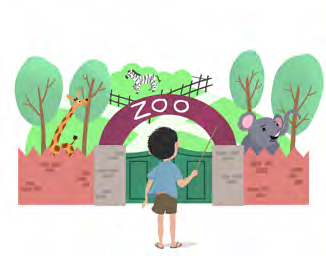
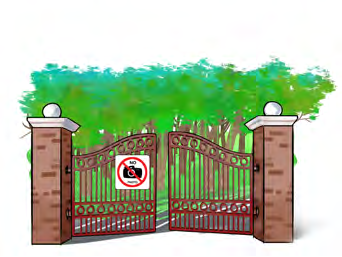
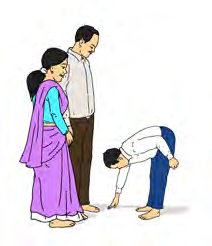
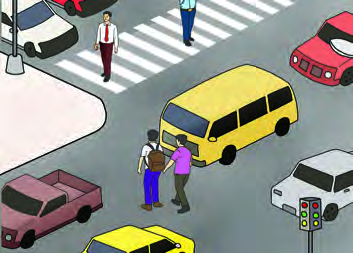
A rule tells you what you must do, what you may do, and what you must not do in a place. Different places have different rules.
Try naming the rules of a place you know well, such as a library. You should keep silence there. You are allowed to read any book on the shelves, but you must return a borrowed book on time, and you must not tear or fold its pages. When you can say the rules of a place, you understand that place better.
A Song About the Wind
Even a poet can play with the idea of learning to do things the right way. In these lines, Robert Frost imagines that the wind once blew wildly, with no lesson and no aim, until man taught it that blowing gently and in the right measure could become a song.
Before man came to blow it rightThe wind once blew itself untaught,And did its loudest day and nightIn any rough place where it caught.Man came to tell it what was wrong:It hadn't found the place to blow;It blew too hard. The aim was song.And listen, how it ought to go!
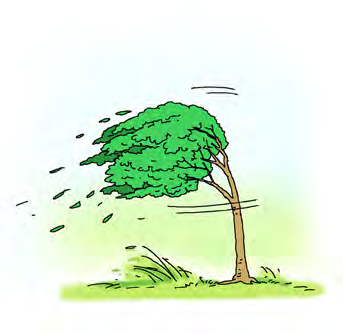
The poem carries a gentle message. Noise becomes music only when it follows a measure. In the same way, life in a public place becomes pleasant only when everyone follows its rules. Sing the lines aloud and feel their rhythm.
Rules at the Central Zoo
The Central Zoo at Jawalakhel, Lalitpur puts up a notice for its visitors. A notice like this is a real text you will meet in life, so read it the way a visitor would: find out what you must do, what is not allowed, and what happens if someone breaks a rule.
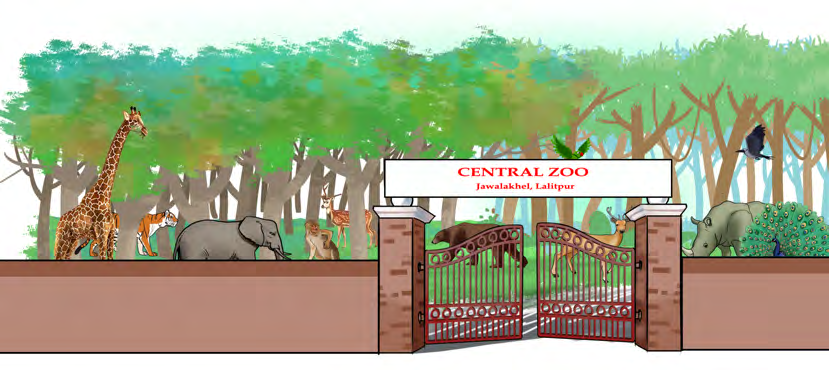
- Stay in line at the ticket counter.
- Show your ticket to the zoo officials whenever they ask. Visitors are obliged to do this.
- Do not make loud noises. Noise disturbs the animals and the other visitors.
- Plastic and plastic products are not allowed on the zoo premises.
- Pets such as cats and dogs must not be brought inside.
- Alcohol and smoking are not allowed. Anyone found doing so will be punished.
- No one is allowed to tease, poke or feed the animals.
- Plucking buds and flowers or tearing leaves is punishable.
- Keep all litter in the bins.
- Visitors are prohibited from selling goods of any type inside the zoo.
The notice ends with a reminder. The zoo is a public place, so it belongs to all of us, and it is our duty and responsibility to keep it clean and safe. Notice how a public notice speaks: short sentences, one rule at a time, and firm words like must, not allowed and prohibited.
Never tease, poke or feed an animal at the zoo. A frightened or angry animal can hurt you even through a fence, and human food can make an animal seriously ill.
Obliged: made to do something because a rule or a duty says so. Visitors are obliged to show their tickets when asked.
Premises: the land and the buildings of a place, taken together. The zoo premises means everything inside the zoo's walls.
Prohibited: not allowed by a rule. Selling goods inside the zoo is prohibited.
Responsibility: a duty to take care of something. Keeping a public place clean is everyone's responsibility.
Talking About Rules
Knowing the rules is half the skill. The other half is saying them politely to another person. Picture two friends walking into the school library. One of them is amazed at the hundreds of books and starts talking. The other points to the silent zone board and whispers that they should keep quiet, because they are allowed to read there but not allowed to talk. That short exchange uses every structure you need.
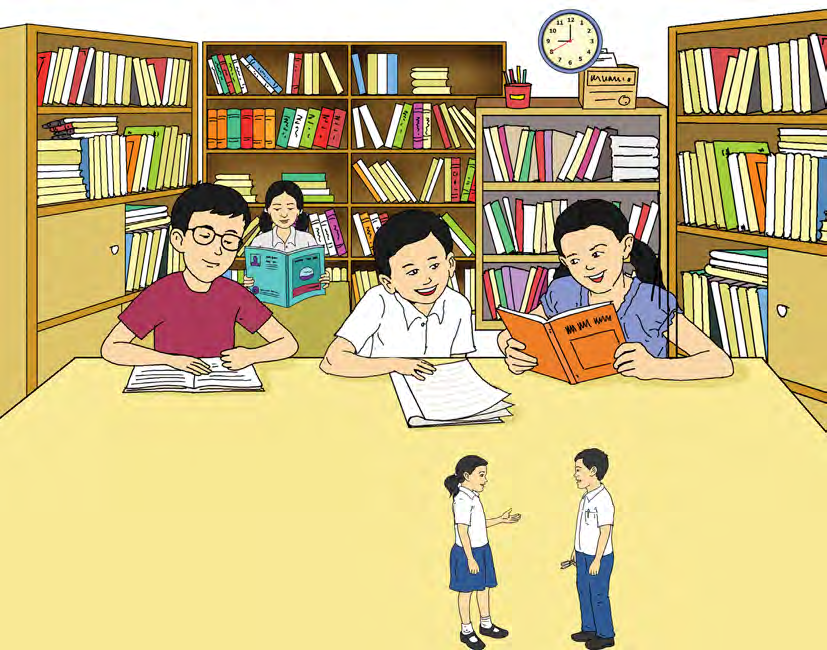
| Saying what is right | Saying what is wrong |
| You should speak in a whisper. | You shouldn't shout. |
| You are allowed to read any book. | You aren't allowed to tear the pages. |
| You can sit at any table. | You can't eat at the table. |
Practise these structures in pairs for different places: a garden, a park, a school hostel, a zoo, a museum and a library. For a park you might say: You should keep the park clean. You aren't allowed to pick the flowers. For a hostel: You should go to bed on time. You can't make noise after nine. Speak in full sentences and take turns.
Listening for Details
Rules and information do not only come in writing. An announcement about a cycling class, for example, tells you who can join, the date the class starts, the time it begins, and who must sign the admission form. When you listen to such a recording, read the questions first so you know what to listen for. Then catch the small facts: names, dates and clock times. Listen a second time to check your answers, because a detail like 15th or 16th can slip past in one hearing.
Dates and times are the easiest details to miss. The moment a recording says a day or a clock time, note it down.
Think also about how you learn something new that you like, such as cycling or swimming. You find out who teaches it, when it starts, and what you need. You ask questions, you practise, and you do not give up after one fall. Learning anything follows this pattern.
Grammar: Must, Have To and Should
English has a small set of verbs that sit before the main verb and show how strong a rule is. We use have to, must and should with the base form of a verb to talk about obligations, things that are necessary to do, or to give advice about things that are a good idea to do. Look at a real moment first. A boy has fallen in the playground. His friends say: Let's run. We should help him immediately. Here should tells us that helping is the right thing to do.
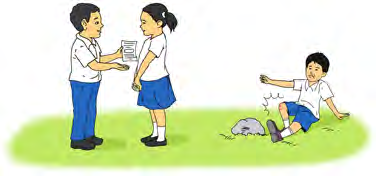
Should: gives advice, or says something is a good idea. You should go to a doctor. Its negative shouldn't advises against something. You shouldn't fight each other.
Must: shows a strong obligation that the speaker personally feels. I must remember to buy a gift for my son. It is my own opinion that makes it necessary.
Have to: shows an obligation that comes from outside the speaker, from a rule, a law or another person. You have to look after your wounds regularly, because the doctor says so. Use it in questions about rules: Do you have to wear a tie for school?
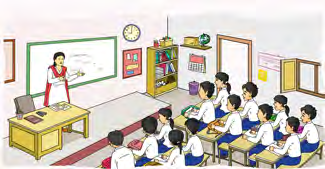
Mustn't: means something is prohibited. You have no choice. You mustn't forget to bring your book.
Don't have to: means there is no obligation at all. You may do it if you like, but nothing forces you. If you don't like him, you don't have to see him again.
Be allowed to: talks about permission. You are allowed to means you can; you are not allowed to means you can't. You can smoke here means the same as you are allowed to smoke here, and you mustn't speak loudly means the same as you are not allowed to speak loudly.
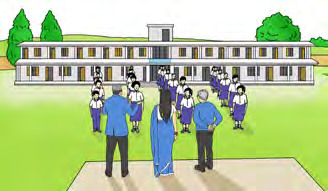
Mustn't bans an action; don't have to only removes the duty. In a non-smoking area you mustn't smoke. In a smoking area you don't have to smoke, but you can if you want to. Students mix these two up more than anything else in this topic.
One more difference matters. Have changes in the third person singular, so with he, she and it you write has to: She has to help her children. Must never changes at all: She must fasten her seat-belt. There is no such form as musts.
Now build rule sentences of your own by joining a subject, a rule word and an action, the way this table does:
| Subject | Rule word | Action |
| We | should | throw the waste materials in the dustbin. |
| You | mustn't | make noise in the class. |
| They | have to | do all the classwork in time. |
| We | aren't allowed to | write on the wall. |
| You | must | go to the washroom with the teacher's permission. |
| They | shouldn't | fight each other. |
Joining Sentences with And, But and Because
Two short sentences often want to become one. English gives you three small joining words for three different jobs. Watch each one at work. I bought a book yesterday. I bought a pen yesterday. These two similar ideas join as: I bought a book and a pen yesterday. He is tall. She is short. These two opposite ideas join as: He is tall but she is short. I didn't come to school yesterday. I was ill. The second sentence is the reason for the first, so they join as: I didn't come to school yesterday because I was ill.
And: joins two similar ideas or adds one thing to another. She went to the coffee shop and had a black coffee.
But: joins two ideas that pull in opposite directions. He was poor but generous.
Because: joins a statement to its reason. She was absent yesterday because she was not feeling well.
To choose the right word, ask what the second idea does. If it simply adds, use and. If it surprises you after the first idea, use but. If it answers the question why, use because.
Rules at the Museum
Rules live inside everyday conversations too. Here two friends plan a museum visit, and one of them explains the rules to the other.
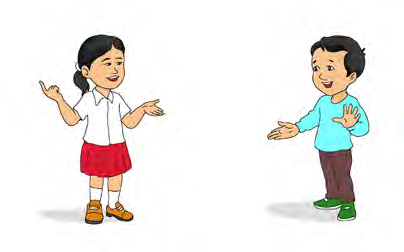
Read the conversation again and sort what you hear into two groups, the way a careful visitor would:
| Things you're allowed to do | Things you're not allowed to do |
| Observe the items from a distance. | Touch the items. |
| Take photos of some permitted items. | Eat inside the museum. |
| Visit on holidays, except Tuesday. | Make noise; silence must be maintained. |
Museum: the place where historic items are kept for people to see and learn from.
Antique: a thing made long ago, valuable because it is very old.
Rare: not common; hard to find another one like it.
Maintain: to keep something in good condition, or to keep it going. We have to maintain silence in the museum.
Ruined: destroyed or spoilt so badly that it cannot be made good again.
Writing Your Own Rules
Now turn from reading rules to writing them. A good set of rules is short, clear and fair. Write one rule per line. Use commands like Keep the classroom clean, or rule words like must, mustn't and should. Say what to do, not only what not to do. Here is a model set of classroom rules you can write and improve with your teacher:
- Come to class on time every day.
- You must keep the classroom clean and put litter in the bin.
- Raise your hand before you speak.
- You should listen quietly when someone else is speaking.
- You mustn't write on the walls or the desks.
- You aren't allowed to leave the room without the teacher's permission.
- Speak politely to everyone.
For a group project, prepare a list of rules and regulations to be followed at school on a chart paper. Divide the work: one group collects rules for the classroom, another for the playground, another for the library. Write each rule large and clear, check the spelling together, and display the chart where the whole school can read it. A rule that nobody can see is a rule that nobody follows.
The full lesson is waiting for you
Create a free account to unlock activities, practice tests, presentations and videos - and to track your progress and confidence score for every subject.
A rule tells you what you must do, what you may do and what you must not do in a place.
10 more points to remember - sign in to see the rest.
Question 1 of 16