People and the Work They Do
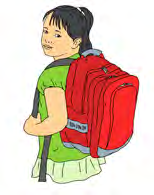
Look around your town or village any morning. A carpenter is cutting wood to make a table. A doctor is checking a sick boy. Students are walking to school with bags on their backs. A runner is training on the track. Every person you see has some work to do, and the name of that work is their occupation. In English we talk about a person's occupation with very simple sentences: He is a carpenter. She is a doctor. They are students.
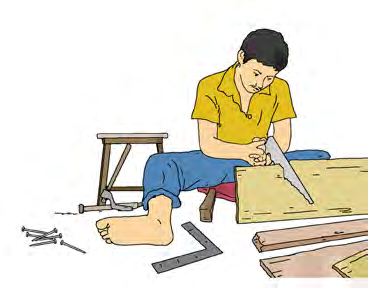

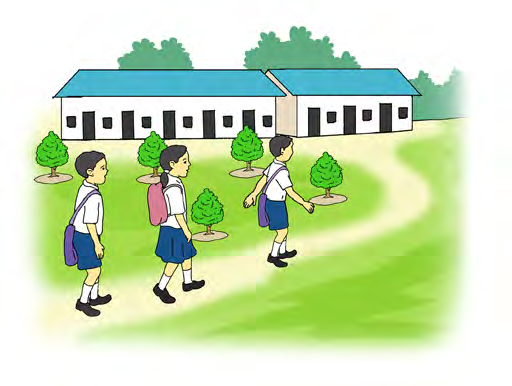
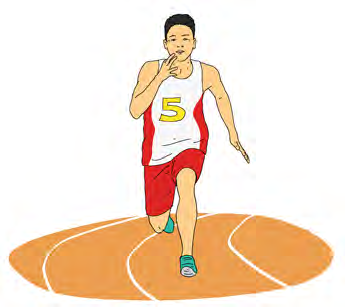
Naming a person's occupation always takes the same shape: first say who the person is, then say what they do. My uncle is a carpenter. He makes chairs and beds. Dr. Rai is a doctor. She treats sick people. Practise this with the people you know: your parents, your neighbours, your teachers.
A Song About Occupations
This little song names many occupations, one line at a time. Read it aloud and notice how each worker gets a verb of their own: the writer writes, the painter paints, the pilot flies.
The writer writes and the poet singsThe painter paints some beautiful things.The doctor heals and the lawyer appealsThe pilot flies planes over the hills.Teachers teach well, the drivers driveThe actor makes some characters alive.The player plays and the dancers danceThe merchant sells goods with good chance.All are busy throughout the daysOr they wander through pleasant ways.Whatever they do, whatever befallThe farmer must have fed them all.
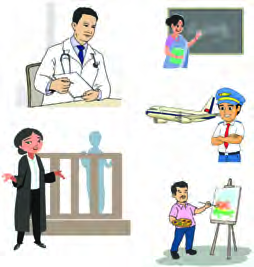

The last two lines carry the song's message. Every worker, whatever they do, eats food that a farmer grew. So every occupation depends on other occupations, and no honest work is small.
T.S. Eliot, a Great Poet
A poet is a person who writes poems. Nepal has famous poets such as Laxmi Prasad Devkota, Bhanubhakta Acharya and Madhav Prasad Ghimire. The English language has its own famous poets, and one of the greatest of the last century was T.S. Eliot.
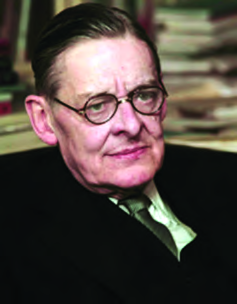
T.S. Eliot is a great American-born English poet, playwright and literary critic. His full name was Thomas Stearns Eliot. He was born on September 26, 1888 in Missouri, in the United States, to Henry Ware Eliot and Charlotte Champe Stearns. He took his higher education at Smith Academy, the boys' college preparatory division of Washington University, from 1898 to 1905, where he studied Latin, ancient Greek, French and German. He began to write poetry when he was only fourteen. His first published poem was A Fable for Feasters, written as a school exercise and printed in the Smith Academy Record in February 1905. He then studied philosophy at Harvard College from 1906 to 1909, completed his B.A. in 1909 and his M.A. the following year, worked as a philosophy assistant at Harvard from 1909 to 1910, and by 1916 he had completed his PhD from Harvard.
Eliot suffered from hernia in his childhood, so his parents hired an Irish nurse to look after him. His nurse was a catholic, and this could have been a reason for his attachment and inclination towards Catholicism from his childhood. His writings are deeply influenced by Biblical stories, myths and their teachings from the time he adopted Catholicism.
Eliot was one of the most influential poets of the 20th century, and his writings brought a new wave in poetry. His first publication, The Love Song of J. Alfred Prufrock, is regarded as a masterpiece of the modernist movement. His other best-known poems are Gerontion (1920), The Waste Land (1922), The Hollow Men (1925), Ash Wednesday (1930), Old Possum's Book of Practical Cats (1939) and Four Quartets (1945). He is also remembered for his seven plays, particularly Murder in the Cathedral (1935), The Cocktail Party (1949) and The Rock, a pageant play (1934). In 1948 he was awarded both the Order of Merit and the Nobel Prize for Literature. Leaving a strong landmark in English poetry and a stirring influence on modern English literature, T.S. Eliot passed away on January 4, 1965 in London.
| Year | Event in Eliot's life |
| 1888 AD | Born on September 26 in Missouri, USA |
| 1905 AD | His first poem, A Fable for Feasters, was published in the Smith Academy Record |
| 1909 AD | Completed his B.A. from Harvard College |
| 1916 AD | Completed his PhD from Harvard |
| 1948 AD | Awarded the Order of Merit and the Nobel Prize for Literature |
| 1965 AD | Passed away on January 4 in London |
Playwright: a person who writes drama or plays.
Critic: a person who judges books, films or art and says what is good or bad in them.
Masterpiece: an outstanding piece of work, the best thing an artist has made.
Inclination: a feeling of being drawn or attracted towards something.
Landmark: an event marking a unique or important historical change.
Introducing People
When two of your friends do not know each other, you introduce them. Say each person's name, then one or two things about them: where they live, or what they do. The two people then greet each other. Read how one girl introduces her two friends.
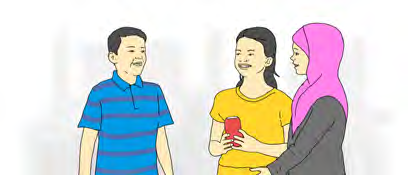
English has many polite expressions for introducing people. Learn these and use them when you introduce your friends.
- Ritesh, please meet Sarita.
- Ritesh, have you met Sarita before?
- I'd like you to meet Nitesh.
- I'd like to introduce you to Lakpa.
- Sabir, this is Karina. Karina, this is Sabir.
- Nice to meet you.
- Pleased to meet you.
- How do you do?
- Happy to meet you.
The first five expressions are for the person who introduces. The last four are replies from the people being introduced. A polite reply completes the introduction.
Listening for Details
When people meet for the first time, they greet each other and then tell each other small details: their name, where they live, which class they read in, what their parents do. A good listener catches these details. When you listen to two people introducing themselves, listen for the names first, then for one fact about each person. Afterwards you should be able to say, for example, that one child lives near the school, that both children read in the same grade, or that one child's father is a teacher.
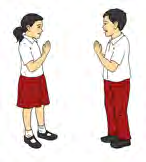
Try this yourself. When a new student joins your class, greet them, tell them your name and one thing about you, and ask for theirs. Then see how much you can remember about them the next day. Remembering details is what listening practice trains you to do.
Is, Am and Are
All the sentences in this unit that tell who somebody is use one of three small verbs: is, am or are. These are the present forms of the verb to be, and choosing the right one depends only on the subject of the sentence.
Use is when the subject is one person or one thing: he, she, it, or a single name. She is a singer. Kaji is a farmer.
Use am only with I. I am the only child of my parents.
Use are when the subject is more than one, or when it is we, you or they. They are children. Shikha and Tanuja are good friends.

| Subject | Verb | Example |
| I | am | I am doing my homework. |
| He, She, It, one name | is | Ms. Singh is a teacher. She teaches English. |
| We, You, They, two or more | are | The cows are grazing in the field. |
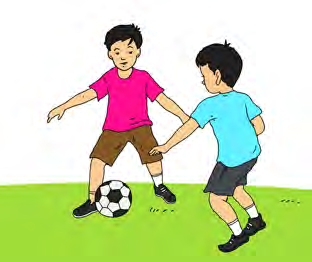
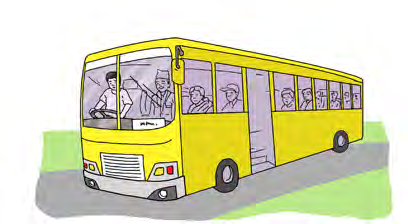
These three verbs also join with action words ending in -ing to say what is happening right now. I am doing my homework. The cows are grazing in the field. Mr. Gurung is driving the bus. The subject rule stays exactly the same.
Two names joined by and make a plural subject, so they take are, never is. Shikha and Tanuja are good friends is correct. Shikha and Tanuja is good friends is wrong.
A Message of Congratulations
When somebody wins a prize, passes an exam or does something wonderful, we congratulate them. A message of congratulations is a short public notice that a school or a family puts up to share the happy news. It is not a letter, because it has no address, no date and no Dear at the top. It speaks to everybody at once.
A good congratulations message carries five things: the name of the person, what they achieved, the prize they won, a warm line of congratulations, and the name of whoever is sending the message. For example, a school might write: We would like to congratulate Ms. Shijan Tharu of Grade Six for winning the Gandaki Province Level Essay Writing Competition on the title My Parents: My Role Model. She has received a cash prize of NRs. 20,000 with a gold medal. She is a role model for all of us. Congratulations Shijan for your great achievement! Head Teacher and Saraswoti Secondary School Family.
Achievement: something that is obtained successfully through effort and skill.
Competition: an occasion on which a winner is selected from among two or more contestants.
Writing a Short Biography
Biography: the written story of a real person's life, told by somebody else.
A biography puts the facts of a life in order: name, birth, family, education, work, and death. You already read one biography in this unit, the life of T.S. Eliot. Now here are the facts of a great Nepali writer, Bal Krishna Sama, arranged as clues. A biography is written by turning such clues into full sentences, in order.
| Clue | Information |
| Name | Bal Krishna Sama |
| Real Name | Bal Krishna Shamsher Janga Bahadur Rana |
| Date of Birth | Magh 24, 1959 BS (February 08, 1903) |
| Birthplace | Gyaneshwor, Kathmandu |
| Parents | Samar Shamsher Janga Bahadur Rana / Kirti Rajya Lakshmi Rana |
| Early Life | Studied in Durbar High School, Rani Pokhari and I. Sc. from Tri-Chandra College, Ghantaghar |
| Contribution | Wrote many stories, poems, essays, compositions and biographies; known as one of Nepal's greatest dramatists |
| Literary works | Mutuko Byatha, Mukunda Indira, Pralhad, Andhabeg, Bhakta Bhanubhakta, Prempinda, Amar Singh, Swasni Manchhe, etc. |
| Death | Saun 06, 2038 BS (June 20, 1981) |
To write the biography, follow these steps.
- Begin with the person's name and who they were: Bal Krishna Sama was one of Nepal's greatest dramatists.
- Give the birth details next: date, place and parents.
- Describe the education and early life in one or two sentences.
- Describe the person's work and name their important books or plays.
- End with the death details, and one closing sentence about why the person is remembered.
Filling in a Form
A form is a printed page with empty boxes that ask for information: your name, your date of birth, your parents' names and occupations, and your address. A school registration form is often the first real form a student fills in. Filling one correctly is a life skill, because banks, offices and exams all use forms.
- Read the whole form once before writing anything.
- Collect the exact information first, from your parents if needed: full names, dates and telephone numbers.
- Write in BLOCK letters, one capital letter in each box, if the form asks for them.
- Use the ink colour the form asks for, usually black.
- Fill every box that applies to you, and leave nothing important empty.
- Check your spelling and your dates before you hand the form in.
Capitalisation
A capital letter is a signal. It tells the reader that a sentence is starting, or that a word is a special name. These are the rules you must follow every time you write English.
- Capitalise the names of people and places, including streets, planets, continents and countries. The Earth is the third planet from the Sun. I met Ramhari on the way to school.
- Capitalise days of the week, months and festivals, but not seasons. His birthday party is on Sunday.
- Capitalise titles and names of institutions. I am reading War and Peace this week.
- Capitalise the first letter of every sentence. She has given me a book.
Days, months and festivals take capital letters, but seasons do not. Write Sunday and April with capitals, but write winter and summer with small letters.
The full lesson is waiting for you
Create a free account to unlock activities, practice tests, presentations and videos - and to track your progress and confidence score for every subject.
An occupation is the work a person does. He is a carpenter. She is a doctor.
11 more points to remember - sign in to see the rest.
Question 1 of 16